Ants in a Commercial Kitchen? What to Do When You Spot a Trail
Learn how to respond to ants in a commercial kitchen, protect food, document sightings and arrange professional treatment.


TLDR
One-off pest treatment may suit an isolated problem when its cause can be addressed. Ongoing prevention deserves closer consideration when activity keeps returning, premises face regular exposure or another incident could seriously disrupt the business.
Key Takeaways
Finding droppings behind stock or hearing scratching above an office ceiling leaves you with an immediate decision: arrange treatment and move on, or put regular pest prevention in place.
The right choice depends on what caused the problem, how easily it could return and what another incident would mean for your business. Choosing one-off vs ongoing pest control means weighing those risks against what each service covers
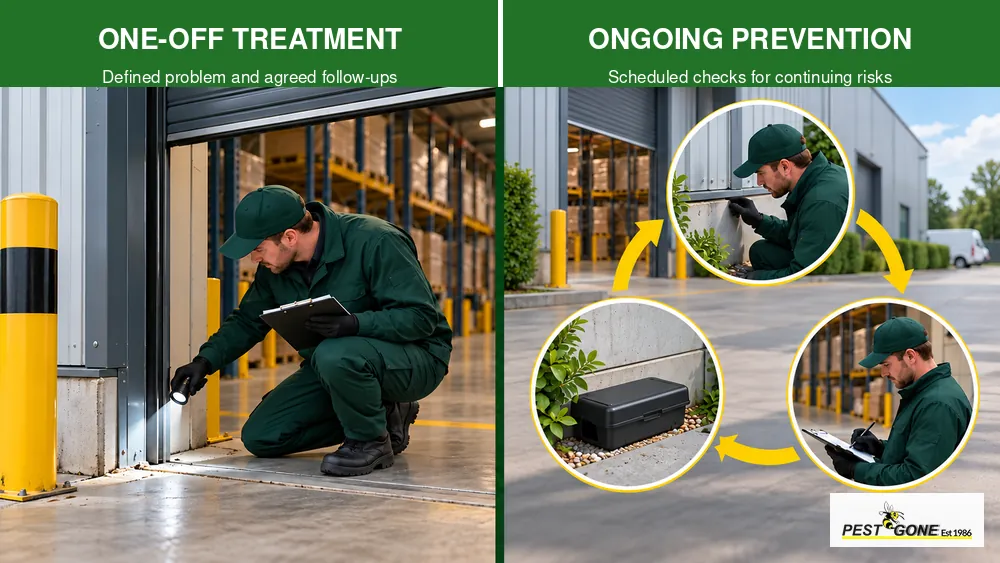
A one-off treatment is designed to deal with a specific pest problem, such as an active wasp nest, ants in a staff kitchen or rodents in a storage area. It does not always mean the issue will be resolved in a single visit, so check which pest and areas are covered, whether follow-up visits are included and how the provider will decide that treatment has worked.
This approach can make sense when the problem is isolated and its cause can be addressed. However, treating only the visible signs may not prevent the pests from returning. Ask whether the inspection will look at possible entry points, food sources and other conditions that could create another problem.
Ongoing prevention combines regular checks with practical steps to reduce the conditions that support pest activity. Depending on the agreement, it may include:
Regular visits help identify patterns, such as repeated signs near a loading door. Your team must still address issues such as overflowing bins, inaccessible stockrooms and recommended repairs between visits.
| Consideration | One-off treatment | Ongoing prevention |
|---|---|---|
| Visits | Treatment and agreed follow-ups | Scheduled inspections, with other visits as specified |
| Spending | Quoted for the agreed job | Recurring charge for an agreed service |
| Potential fit | Isolated activity with an identifiable cause | Recurring activity or premises with persistent exposure |
| Important check | What happens if treatment needs further work | Which pests, areas and call-outs are covered |
Use the inspection findings to judge which service fits your premises. Ask how the provider will assess progress and respond if staff report further activity.
An active wasp nest beside a small office entrance may justify a specific treatment without establishing a wider prevention programme. A technician should first assess the nest and any other relevant activity.
Droppings in several rooms or repeated sightings across a building deserve a broader investigation. The area where someone first noticed pests may not show the full extent of the problem.
A defined treatment becomes more useful when it is supported by practical changes. If an inspection identifies accessible food or an entry route, agree who will deal with it and when.
Keep checking the affected area afterwards, following the technician’s advice. A business can choose one-off treatment while still maintaining clear reporting, cleaning and maintenance routines.
A small office with secure waste storage and occasional deliveries may have different needs from a busy food premises. Its decision should reflect the actual building, previous activity and potential consequences.
Even a business with limited exposure should reconsider its approach if signs return. Repeated bookings for the same problem can indicate that the original cause remains unresolved or new pests are entering.
If staff repeatedly find droppings near the same shelves or ants reappear around food storage, another treatment alone may leave you asking the same questions next month.
Regular monitoring can help establish where activity continues and whether recommended changes are working. Ask the provider how findings will be recorded and used to adjust the plan.
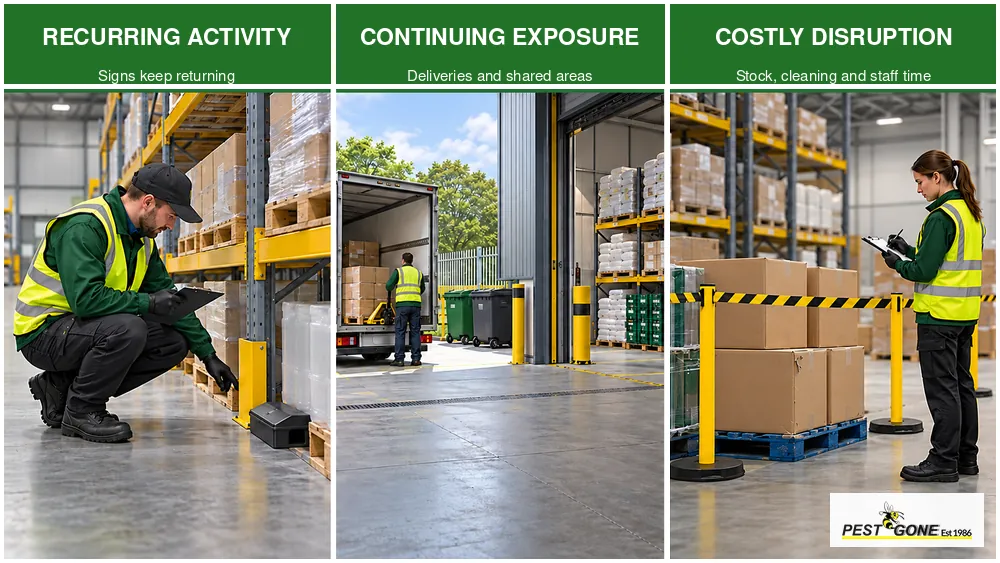
Frequent deliveries, open loading doors, food handling and shared waste areas can make pest prevention a continuing task. These conditions deserve attention even when staff have not reported an active infestation.
For example, a warehouse may need checks around goods-in areas and external doors, while a café may need closer attention to food storage and waste arrangements. The inspection schedule should follow the site’s risks.
Consider what happens if pests affect stock, interrupt food preparation or appear where customers can see them. The cost may include disposal, cleaning, staff time and disruption alongside treatment.
Where the consequences would be substantial, planned inspections may offer useful oversight. Ask how urgent reports are handled between visits, rather than assuming a recurring fee includes immediate attendance.
Treatment quotes and prevention agreements cover different things, so look beyond the headline price. For one-off treatment, check what the inspection covers, whether follow-up visits are included and if proofing or repairs cost extra. For ongoing prevention, confirm the visit frequency, pests and areas covered, reporting arrangements, and any charges for additional or emergency visits.
Compare both options over the same period, including treatment costs, damaged stock, cleaning and staff time. Prevention is not always cheaper; its value depends on your level of exposure, the quality of the service and whether your business carries out the recommended actions between inspections.
A pest control arrangement should reflect how your business operates today. If you have changed the building, stock or daily routines since the last inspection, ask whether the existing treatment scope or prevention schedule still fits.
Tell your pest controller if you start storing food, introduce a new product range or increase deliveries. Ask them to review the receiving and storage areas, including where staff should check incoming goods and report concerns.
For example, a shop adding packaged snacks may need to reconsider how stock is stored and damaged goods are handled. A change like this is a useful reason to reassess prevention, even if previous pest activity was dealt with through one-off treatment.
Before refurbishment or an extension, explain which areas will be opened up, moved or temporarily inaccessible. Agree how inspections can continue during the work and whether existing monitoring points need professional review.
Afterwards, arrange a check of the completed areas and any outstanding repairs. Keep records of changes so the technician can compare new findings with the layout and conditions that existed before work began.
If your premises share a bin store, loading yard or service area, establish who can authorise inspections and arrange maintenance there. A treatment confined to your unit may leave questions about activity in spaces outside your control.
Where the inspection identifies a shared issue, involve the landlord or managing agent and agree who will complete each action. Make sure your provider knows about access limits before you accept a proposal covering only part of the site.
An infestation needs attention even if you are not ready to commit to a long-term agreement. Start with an inspection and treatment, then review what may be causing the problem and whether your team can address it.
Agree when to check the results, and keep track of new reports, repairs and changes to deliveries, waste handling or room use. Give staff a simple way to report concerns, including the location, date and a photo where practical, so you can judge whether the current approach is working or ongoing prevention is needed.
We’re a family-run pest control company founded in 1986, helping homes and businesses across Bedfordshire, Milton Keynes and surrounding areas. We take a tailored approach, offering treatment, prevention advice and follow-up care where needed.
We provide pest control services for rodents, wasps, ants, fleas and pigeons, alongside fumigation. Our discreet, unmarked vehicles make it easier for businesses to arrange support while we work around access restrictions, opening hours, sensitive areas, staff and customers.
You do not need to choose a contract before understanding the problem. Start with advice on the signs you have found, the areas affected and the work needed to bring activity under control.