Ants in a Commercial Kitchen? What to Do When You Spot a Trail
Learn how to respond to ants in a commercial kitchen, protect food, document sightings and arrange professional treatment.

TLDR:
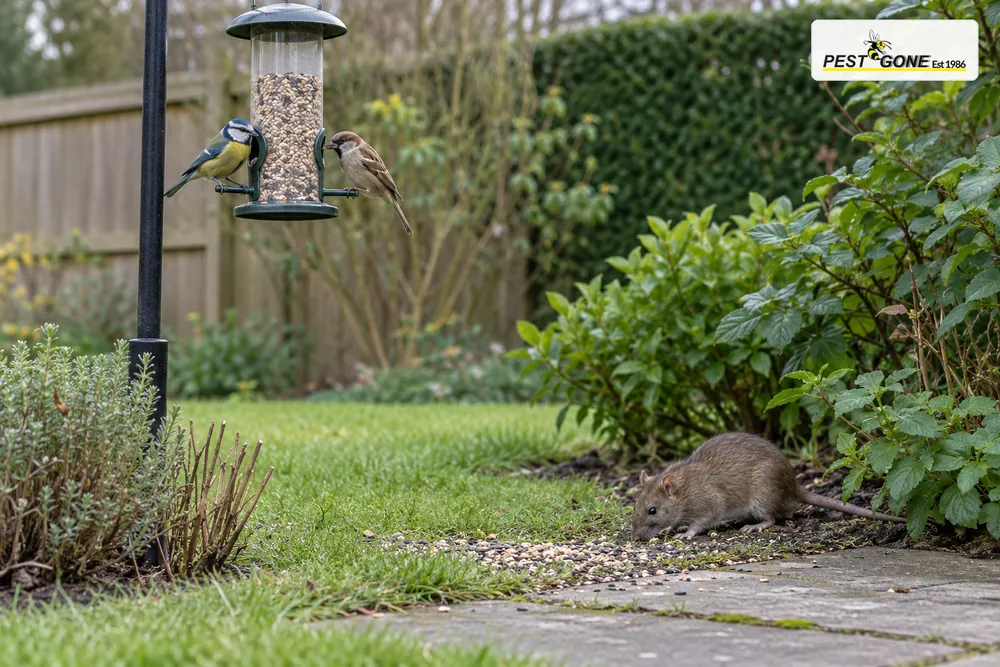
Bird feeders can attract rats when accessible seed turns the feeding area into a dependable food stop. A rat at the feeder may be travelling from a nest or sheltered route elsewhere, so check out the wider garden before treating the feeder as the only cause.
Key Takeaways
Garden bird feeders are designed for finches, robins and other welcome visitors, but rats will take advantage of an easy meal wherever they find one. The feeder does not create a rat problem by itself, yet spilled seed and food left within reach can encourage rats to return.
So, do bird feeders attract rats? They can, especially when seed collects on the ground; food stays out overnight, or the feeding station sits close to dense cover. A few practical changes can make the area less rewarding for rodents while allowing you to keep supporting garden birds.
Rats eat whatever is readily available, including seeds, nuts, suet, mealworms and kitchen scraps. A regular feeding routine gives them a predictable place to look, while discarded food, wind and overfilled tubes can leave a worthwhile meal below the feeder.
A feeder beside a shed, hedge, compost heap or cluttered corner puts food close to shelter. Nearby water can make the area more attractive too, so remove accessible food and check out the wider garden before assuming the feeder is the only cause.
A quick movement at dusk can be difficult to identify, so look for several clues before deciding what you are dealing with.
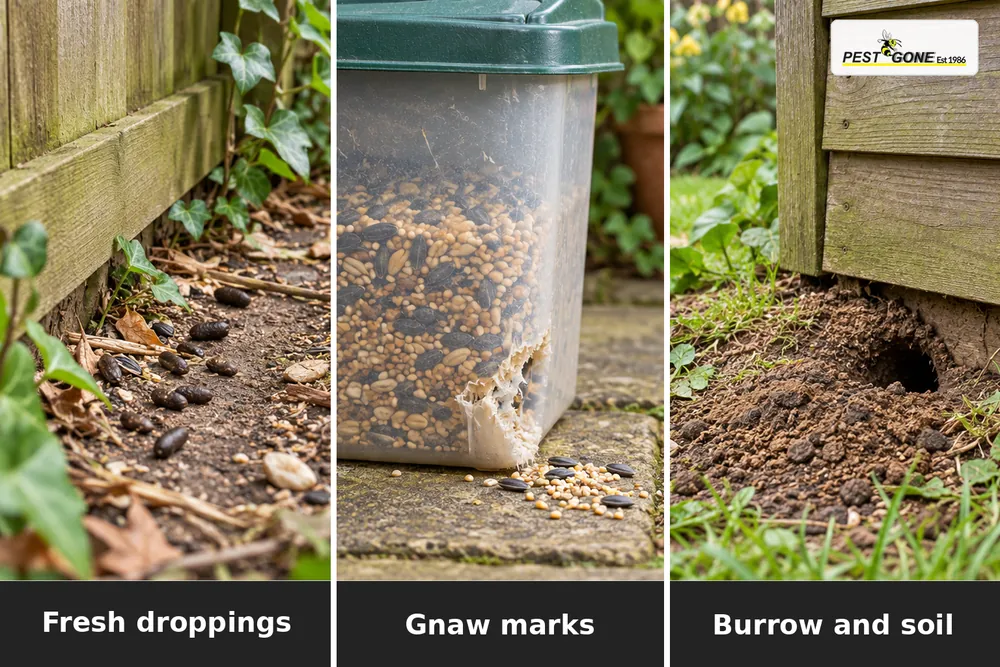
Look for:
Avoid touching droppings or nesting material with bare hands. If the evidence is unclear, take photographs from a safe distance and note where and when the activity occurs. Repeated activity, fresh droppings, burrows, or signs close to the house deserve a broader inspection.
Start by stopping seed from reaching the ground. Sweep up food, husks and damaged fat products, then place the waste in a closed household bin rather than a compost heap. Keeping the area clear also makes fresh spills easier to spot.
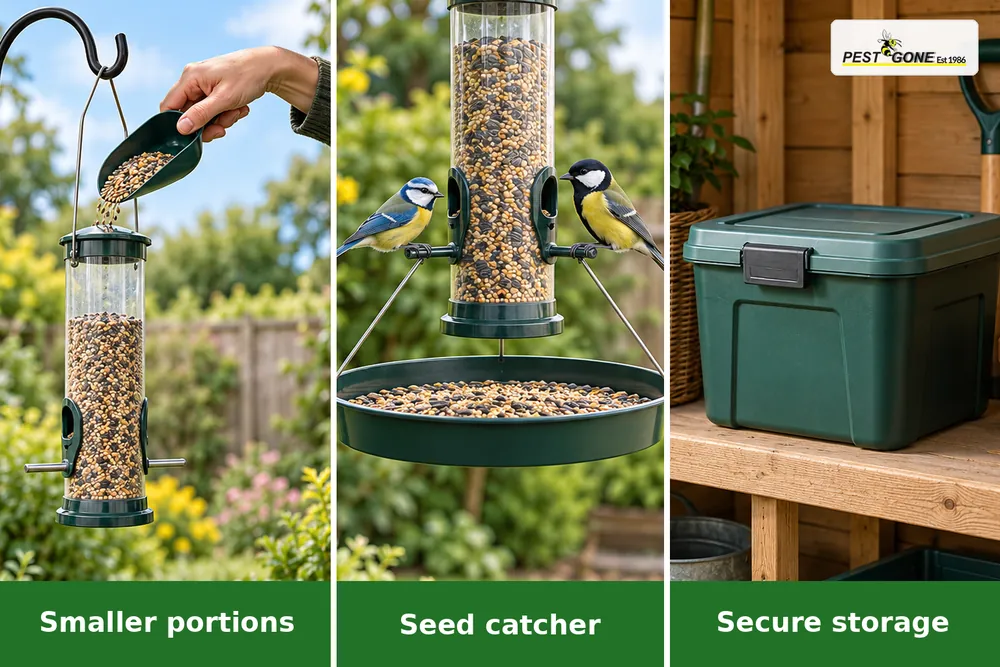
Fill feeders with an amount the birds are likely to finish rather than topping them up automatically. The RSPB advises feeding in moderation and adjusting the quantity to demand, with seed and peanuts ideally eaten within one or two days. Smaller portions create less waste and show when birds are rejecting parts of a seed mix.
Use a wide tray or seed catcher to collect spilled food, empty it before dusk and keep it clean. Avoid excess feeding, remove bird food at dusk in urban areas, and dispose of waste securely, so it does not become an overnight food source for rats.
Watch what gathers under the feeder. If birds consistently discard a large part of a mixed seed blend, try a better-matched food or a feeder suited to the species visiting your garden. Husk-free options can reduce debris, but you will still need to clean up remaining food.
Raising a feeder does not necessarily keep rats away. They can climb rough posts, fences, branches and nearby structures, so place the feeder in an open spot away from walls, overhanging branches, and stored items. A smooth pole with a properly fitted baffle can help but check that nothing nearby gives rats an easy way around it.
Move the feeder occasionally to avoid a build-up of seed and droppings. Clean it at least weekly and clear away old food underneath, as recommended in the RSPB’s bird feeder hygiene guidance.
An open bag in the shed may provide an easier meal than the feeder. Store bird seeds, pet food and animal feed in sturdy containers with tight-fitting lids, clean up spills promptly and check nearby surfaces for gnawing or droppings.
Food attracts rats, but nearby cover can turn occasional visits into a regular route. Cut back dense growth, remove unused timber or debris, and check beneath decking or sheds for openings or disturbed soil.
Keep bin lids closed, and food waste contained. If you compost food, use a secure, well-managed container. Focus on clutter, unmanaged food and sheltered access near the feeder, buildings and waste storage without removing every wildlife-friendly feature.
Rats can travel through fences, alleyways and connected gardens, so changes one property may not remove every food source. If you share a yard, bin store or boundary, tell the neighbour, landlord or managing agent what you have seen and focus on specific evidence rather than blame.
Agree on simple measures such as closing bin lids, cleaning spilled feed and clearing shared clutter. For a rented home, keep dated photographs of burrows, damage, or indoor signs so the person responsible for the property can understand the problem and arrange the right next step.
You may not need to give up bird feeding permanently but pause if fresh rat activity continues after reducing portions and controlling spills. Restart only when activity has stopped, using smaller quantities and close monitoring.
If you keep feeding while monitoring a possible sighting, remove feeders at dusk and clean beneath them daily. Pause completely if fresh signs appear or the changes do not reduce activity.
Note when you cleared the area and changed the feeding routine, then check beneath the feeder, along fences and around sheds each morning for fresh seed, droppings, disturbed soil or worn paths. Look again at dusk from a safe distance; a motion-activated camera can help but keep it on your property and avoid recording neighbouring gardens.
Photograph signs before cleaning them and record where they appeared so you can compare activity over several days. One quiet night does not prove the rat has gone. If signs continue or move towards a shed, garage or house, avoid handling droppings or disturbing burrows and consider contacting a pest professional.
Do not scatter poison or place unprotected bait around a bird feeding area. Poorly chosen control measures can expose children, pets and wildlife, and they may fail to address the nesting place or access route.
Moving the feeder to another untidy corner can shift the activity without solving it. Blocking a visible hole too soon may also divert rodents elsewhere. Focus first on food, water, shelter, and access. If control is needed, a pest professional can assess the property and select an approach suited to the location and level of activity.
A rat taking fallen seed outside may still have access to a shed, garage, wall void or nearby drain. Look beyond the feeding station if sightings continue after food has been removed.
Arrange professional advice when you notice:
An inspection can establish where rodents are travelling, what is sustaining them and which prevention of work is realistic.
We’re a family-run pest control company established in 1986. Our technicians support homes and businesses across Bedfordshire, Milton Keynes and surrounding areas, combining treatment with practical advice to help reduce the chance of rodents returning.
Our rat and mouse pest control service includes an assessment, a treatment plan suited to your property and straightforward prevention advice. We can also arrange follow-up visits to monitor activity and review the measures in place when needed. Our unmarked vehicles allow us to work discreetly at homes and businesses.
A cleaner feeding station may be enough to stop an occasional visitor from finding a reliable meal. If rats continue to appear, the feeder may be revealing a wider problem that needs proper investigation.
Contact Pest Gone for professional rodent control!