Ants in a Commercial Kitchen? What to Do When You Spot a Trail
Learn how to respond to ants in a commercial kitchen, protect food, document sightings and arrange professional treatment.

TLDR
Ant treatment can begin reducing visible activity within a few days, but garden-ant problems may take up to two weeks to control, while some baiting programmes need several weeks. Follow your technician’s aftercare instructions and ask for a review if activity spreads or does not improve within the timeframe you were given.
Key Takeaways
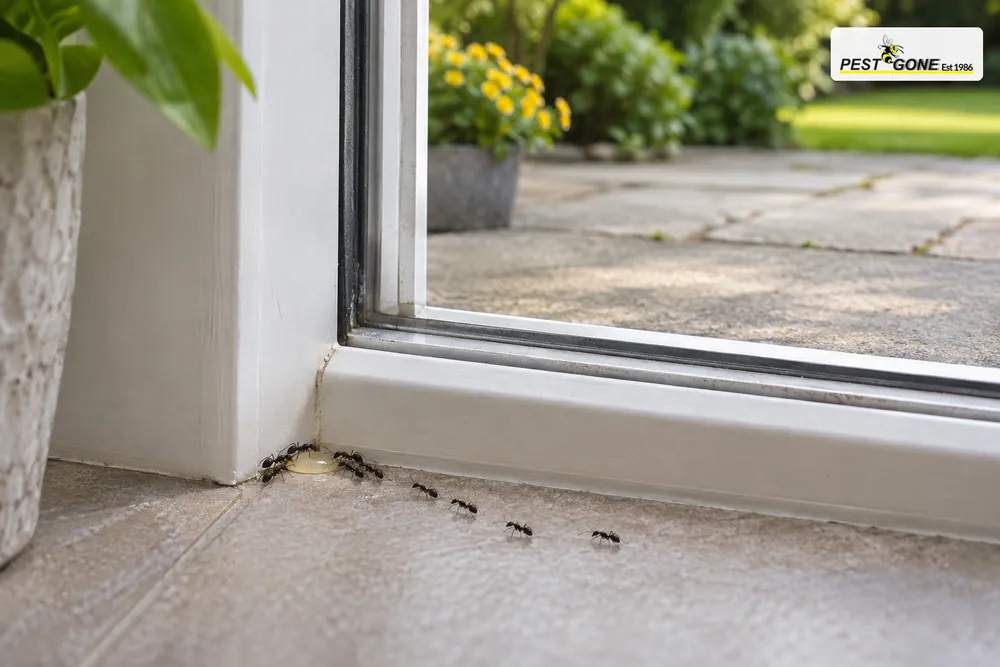
You have had the ants treated, but there is still a trail beside the patio door. Seeing them again can leave you wondering whether the treatment has worked.
How much activity to expect depends on the treatment used and how long it has been in place. Knowing what to watch for also helps you avoid cleaning away or disrupting the treatment.
For garden ants, improvement may take several days and control can sometimes take up to two weeks, depending on the species, product and infestation. Ask your technician when to expect fewer ants and when continued activity should be reviewed.
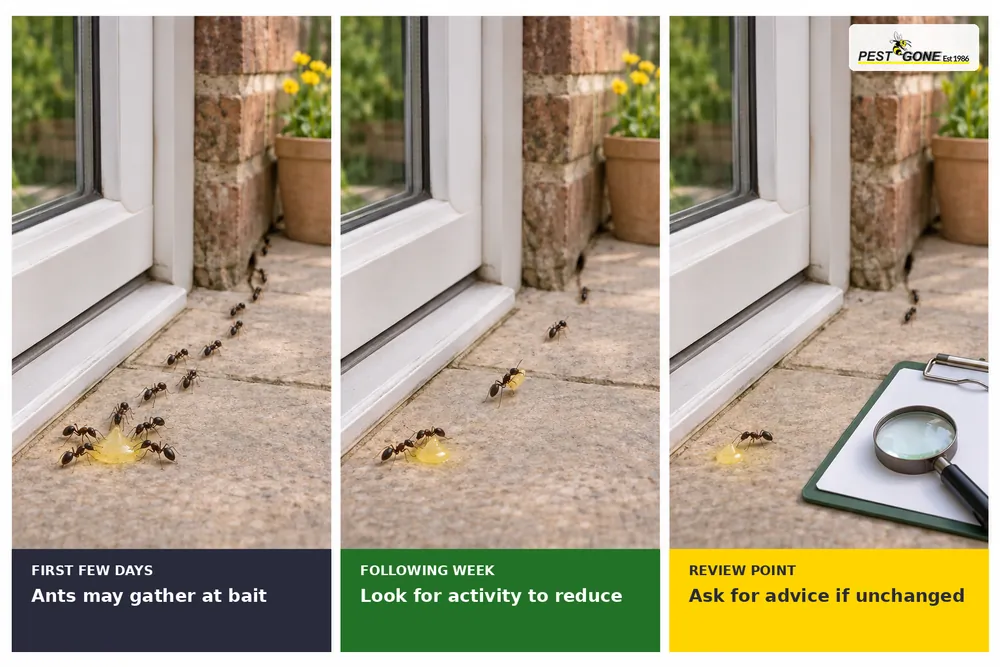
You may continue seeing workers along familiar routes. If bait has been applied, ants may gather around it temporarily as they feed.
Leave feeding ants alone where your technician has placed bait. They need time to take it back to the nest, even if the area looks busier than before.
Watch for fewer ants using the same route or reaching the same cupboard over several days. A single busy afternoon does not tell you much about the overall progress.
Bait treatments can take a week or more to show their effect. Contact your technician if the activity is unchanged beyond the improvement period discussed at your appointment.
Some infestations need a longer baiting programme or more than one visit. Certain indoor species, including Pharaoh ants, can require several weeks before results become evident.
Ask whether your infestation needs a longer programme and when progress will be checked. Having a review date makes it easier to judge whether things are moving as expected.
Ant bait contains an insecticide mixed with an attractive food source. Workers feed on it and carry it back, allowing the treatment to reach other colony members.
The insecticide acts slowly enough for workers to return to the nest. This is why a bait treatment can still be working while you can see live ants nearby.
A contact treatment may kill exposed ants quickly, while bait takes time to spread through the colony. Fewer ants immediately after a visit does not, on its own, confirm that the nest has been controlled.
Check your treatment report or ask which method was used. A sprayed floor edge, gel placement and enclosed bait station can each need different aftercare.
Advice for garden ants entering through an external doorway may not suit ants nesting within a building. Identifying the species helps determine which treatment and follow-up arrangements are appropriate.
If ants appear in a different part of the property or look different from those originally treated, tell your technician. A clear photo may help them decide whether the species needs another look.
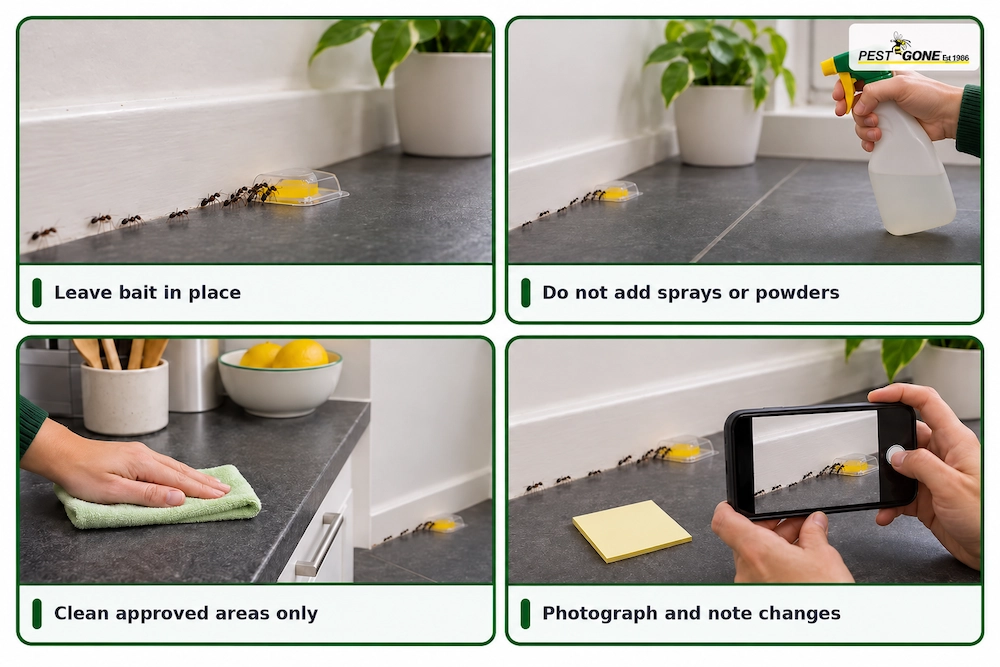
Avoid adding shop-bought sprays or powders to a professional baiting programme unless your technician approves. They can kill feeding workers or drive ants away from the bait.
If you have already applied for another product, tell the technician its name and where and when you used it. That information can help explain why ants are avoiding a placement or using a different route.
Keep bait stations and gel in the positions chosen by your technician. Moving them behind a cupboard or closer to a visible trail could change how ants find and feed on the bait.
Contact the company if bait appears depleted, a station breaks or a placement becomes accessible to a child or pet. Ask for instructions before moving, opening or refilling anything.
Mopping a treated floor edge or wiping away gel can remove the product. Cleaning products may also interfere with bait placements.
Ask which surfaces you can clean normally and which must be left alone. Follow the timing given for your treatment rather than a cleaning rule found online or used after a previous visit.
Sealing gaps can help prevent future entry, but check the timing before working around an active treatment. Repairs could disturb placements or change the routes the technician is monitoring.
Point out any gaps you would like to seal and ask when to do the work. This lets you plan repairs without disturbing an active treatment.
Keep cleaning food preparation areas where your technician says it is safe to do so. Wipe up spills, close food packets properly and store sugar, biscuits and similar foods in sealed containers.
Check around bin lids and pet bowls for leftover food. Removing these other food sources can help ants find and feed on the bait.
Keep children and pets away from treatment placements and observe any restrictions on entering treated rooms. The appropriate arrangements depend on the product and how it was applied.
Check the access instructions each time a product is applied. If you are unsure when a room can be used again, call the company before allowing children or pets back in.
Make sure everyone responsible for the property knows where treatment has been placed. A cleaner, family member or colleague could otherwise wipe it away without realising.
At work, give the treatment report to whoever manages cleaning and maintenance. Choose one person to pass on sightings so the technician receives a clear account of what is happening.
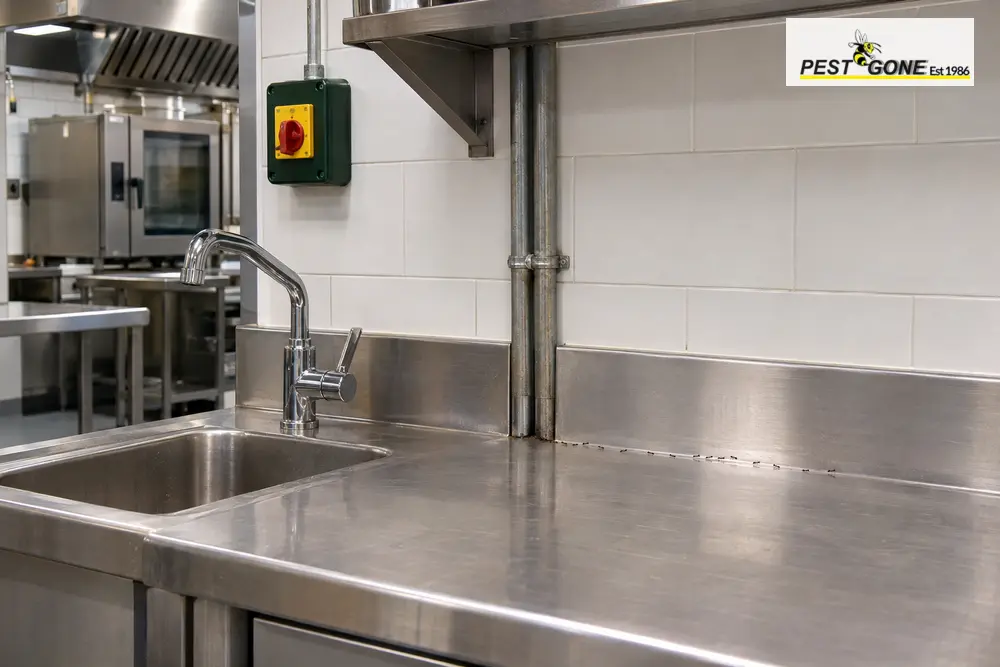
Check the affected areas once a day, at roughly the same time where practical. Note whether activity is lower, similar or higher, where ants are appearing, and whether their location changes. A photograph of a trail or entry point can help explain the pattern without disturbing anything.
Record changes such as fewer ants by one area but a new trail elsewhere, including when you first noticed it. Also note any cleaning, building work or accidental disturbance since the visit, as these details help the company assess progress and decide whether the plan needs adjusting.
Contact your pest controller if you notice any of the following issues.
You can ask for advice if activity changes or does not improve within the expected timeframe, explaining what you have observed so the technician can assess whether a visit is needed. Seek prompt advice if ants reach food preparation or storage areas, and businesses should inform the person responsible for food hygiene.
Pest Gone is a family-run company founded in 1986, serving homes and businesses across Bedfordshire, Milton Keynes and surrounding areas. We use unmarked vehicles for discreet visits.
Our ant control service includes an assessment and a treatment plan suited to your property. Tell us where ants are appearing, what you have already tried and whether children or pets need to be kept away from particular areas.
If we treated your property, have the treatment date and a brief update on activity ready when you call. We can discuss what you are seeing and whether a further assessment is needed.
Still seeing ants after treatment, or ready to arrange professional help?
Call Pest Gone to discuss your concerns and request a quote.