Fleas in Autumn? Your Heating Could Be Helping Them
Fleas in autumn can thrive in heated homes. Discover why they appear, warning signs to watch for and how to tackle infestations in Bedfordshire.


TL;DR: Fleas do not disappear when temperatures drop. Central heating can help them remain active indoors, while warmth and movement may reveal hidden infestations. Spotting the warning signs early can prevent a minor flea problem from becoming a bigger headache.
Key Takeaways
Turning on the heating feels comforting, until itchy ankles, a restless pet or tiny jumping insects suggest an unwelcome problem. While fleas are often associated with summer, colder weather does not necessarily mean they have disappeared from your home.
Signs of fleas in the house can become more noticeable when the heating comes on, as warmth may help existing infestations remain active. Whether you own a Bedfordshire home, rent a flat or manage a commercial property, recognising these signs early can help prevent a bigger problem.
Fleas can survive well beyond summer, with adults feeding on animals while eggs, larvae and pupae remain hidden in carpets, furniture and pet bedding. As the PDSA explains, central heating can help flea infestations persist through the colder months.
Warmth, movement and carbon dioxide from nearby people or pets can encourage waiting fleas to emerge from cocoons. Heating alone may not wake them, but a warm, active home can reveal an existing infestation worth checking.
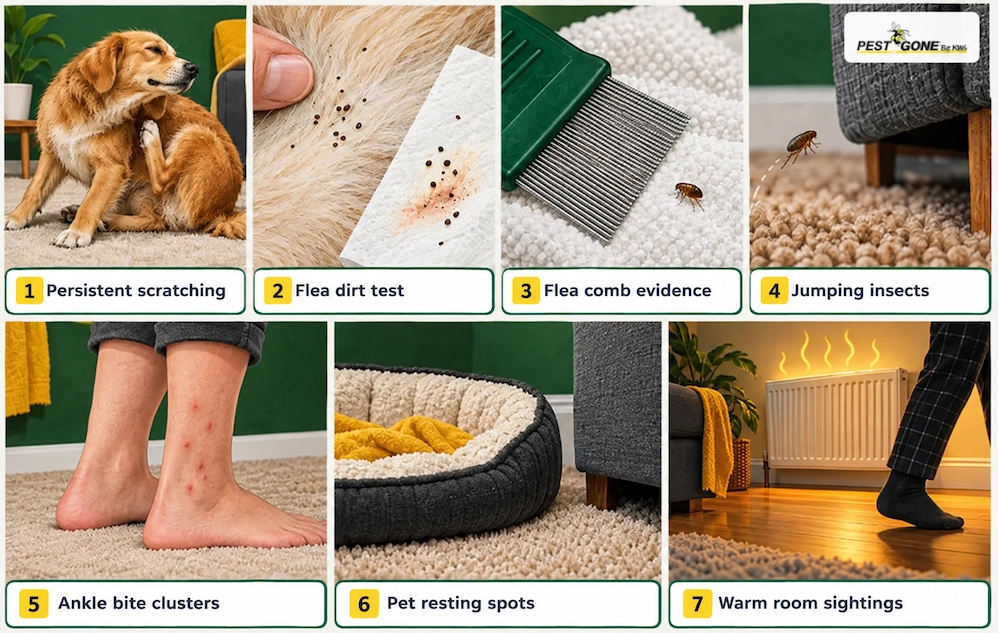
Occasional scratching is normal, but persistent scratching, chewing or grooming could signal fleas or skin irritation. Pay attention if your pet repeatedly scratches or nibbles its back, especially around the base of its tail.
Fleas are not always responsible, as allergies and other skin conditions can also cause similar symptoms in pets. If your pet develops sore skin, inflammation or hair loss, consult your vet for appropriate advice.
Tiny black or dark-brown specks can reveal a flea problem before you even spot live fleas. They resemble pepper near your pet’s skin, especially around the tail. This material can be flea dirt, which is flea droppings containing digested blood.
Place a few dark specks on damp white kitchen paper; reddish-brown stains strongly suggest flea dirt rather than soil. If you notice these marks, check your pet’s coat, bedding and favourite resting spots for more clues.
Gently comb your pet’s neck, belly and tail with a fine-toothed flea comb to check for fleas and their droppings. After each pass, check the comb against a white towel to spot tiny fleas and droppings more easily.
Adult fleas move very quickly and may leap away before you get a clear look, making them difficult to spot. Finding a live flea confirms its presence, but an empty comb cannot rule out fleas hiding elsewhere in your home.
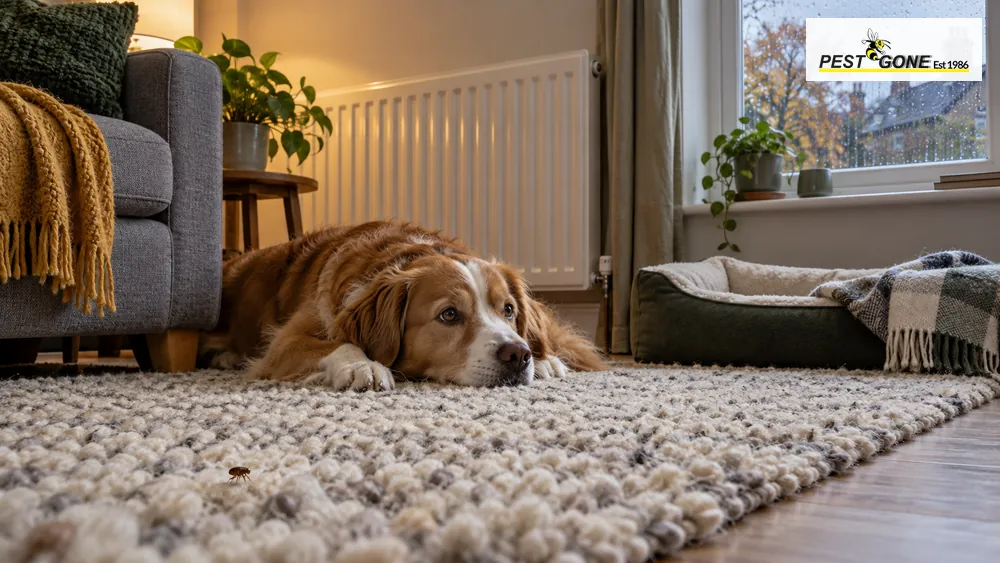
You may see a dark speck spring away as you cross the lounge. Unlike bed bugs, which crawl, adult fleas have powerful hind legs and can jump. They are typically reddish-brown, narrow-bodied and only a few millimetres long, which makes them easy to miss against darker flooring.
Check rugs, sofas and your pet’s favourite spots for jumping insects, but remember they are not always fleas. If possible, carefully capture the insect in a clear container or photograph it to help confirm its identity.
Flea bites often cause small, itchy clusters around the feet, ankles and lower legs, especially when these areas are exposed. These itchy marks may appear after walking across carpets or entering quiet rooms where fleas have remained unnoticed for weeks.
Bites alone cannot confirm fleas, as other insects and skin conditions can cause similar marks, so check for physical evidence. Ask a pharmacist about persistent itching, and seek medical advice if symptoms worsen or an infection develops, as the NHS recommends.
Flea activity often clusters where pets rest, as eggs fall from their coats into bedding and surrounding areas. Flea larvae can develop unnoticed in carpet fibres, soft furnishings and tiny gaps, making early infestations surprisingly difficult to spot.
Check pet beds, favourite cushions and sofas, especially in rentals where previous occupants may have kept animals. Repeated clues in one spot can reveal more than a quick scan of the room.
This is where the heating connection matters. A spare bedroom, recently vacated flat or quiet living room can appear free of pests, only for jumping insects to become noticeable once people start walking through it again.
Fully developed fleas can wait inside cocoons for a suitable host. Heat, vibration and exhaled carbon dioxide can help trigger emergence. A sudden burst of activity does not mean fleas just arrived. They may have been developing unnoticed for some time.
Start where pets spend the most time, using a flea comb and damp white paper to check for fleas and droppings. Inspect bedding, rugs, sofas and hidden spaces beneath furniture, using a bright light to spot clues on dark carpets.
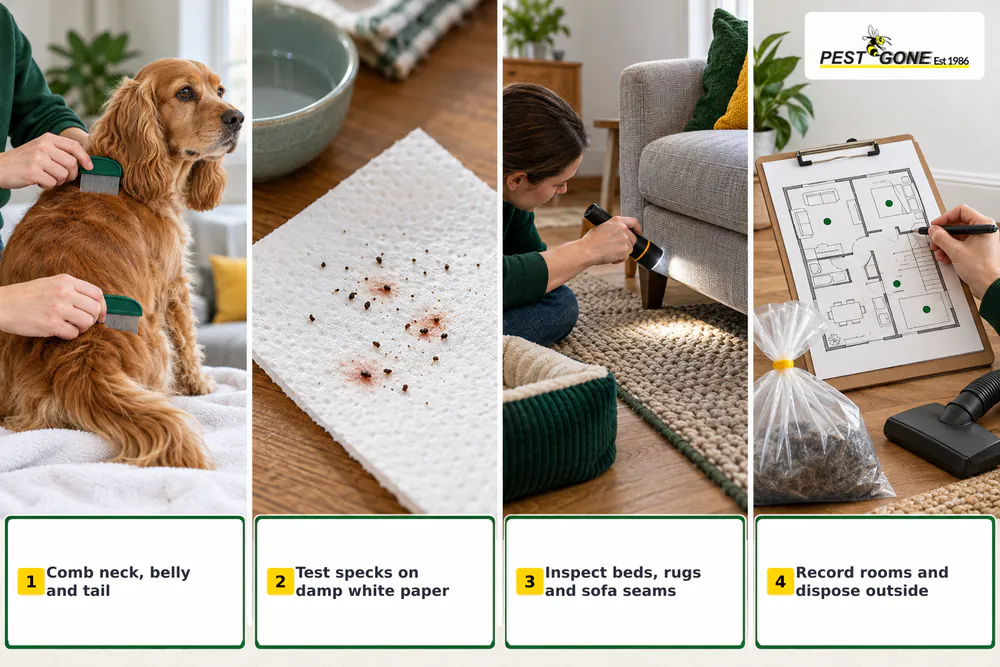
If several warning signs appear together, take note of which rooms are affected and when you noticed activity. Landlords can ask about previous pets without blaming occupants. A house without pets today may still contain flea stages left from an earlier infestation.
Vacuum carpets, soft furnishings and pet resting spots thoroughly, then seal and dispose of the contents outside. Wash pet bedding and suitable fabrics at a high temperature where care labels allow.
Ask your vet about suitable flea treatment, and never use dog products on cats because some contain toxic permethrin. Follow insecticide labels and professional aftercare advice, including when children and pets can safely return.
One suspicious bite does not confirm fleas, but repeated sightings of live fleas or flea dirt warrant action. Seek professional assessment if several rooms are affected, fleas persist despite cleaning and pet treatment, or new occupants are moving in.
Businesses should take repeated flea reports seriously, as infestations can disrupt staff and visitors. Identifying the pest and its source helps determine the right treatment.
Pest Gone is a family-run pest control company established in 1986, serving Bedfordshire, Milton Keynes and surrounding areas. Its flea pest control service covers homes, rental properties and selected commercial premises, with discreet visits and practical advice suited to the property.
Pest Gone assesses affected rooms, possible flea sources and infestation levels before recommending treatment. The team also provides preparation and follow-up guidance, especially for recurring or widespread infestations.
Noticed any of these seven warning signs? You don’t have to tackle a flea infestation alone.
Contact Pest Gone today!