Signs of Fleas in the House: 7 Clues Your Heating Could Be Waking Them Up
Spot the 7 signs of fleas in the house, from itchy bites to scratching pets. Learn how central heating affects flea activity and when to seek expert help.

TL;DR: Cold weather does not always mean fewer fleas, especially when central heating keeps homes warm throughout autumn. Existing infestations can continue developing in carpets, furniture and pet bedding, making early detection, proper pet care and effective household treatment essential.
Key Takeaways
As autumn evenings turn chilly across Bedfordshire, households bring out thicker blankets, close their windows and switch the central heating back on. While these changes make homes feel cosy, the extra warmth can also encourage flea activity just when most people assume the pests have disappeared.
The colder weather may suggest flea season is over, but an existing infestation can continue indoors long after summer ends. So why might fleas suddenly appear in a previously quiet home, and what should you do next?
As temperatures drop outside, central heating can help existing flea infestations thrive indoors. With sufficient moisture and access to animal hosts, developing fleas can survive in sheltered areas such as carpets, upholstery and pet bedding, even as temperatures outside continue to drop.
According to veterinary charity PDSA, flea problems can increase when central heating is switched on in late autumn. While heating does not create fleas, it can help existing infestations continue developing indoors despite the colder weather.
Adult fleas can wait inside cocoons until movement, warmth or carbon dioxide signals a nearby host. For example, when a spare bedroom is used again after weeks of sitting empty, waiting fleas may emerge, making an older infestation look like a sudden new problem.
One visible flea could mean more are developing unseen in carpets, floorboard gaps and pet bedding. According to the British Pest Control Association, most flea development happens away from pets, where eggs hatch into larvae before developing into pupae and adults.
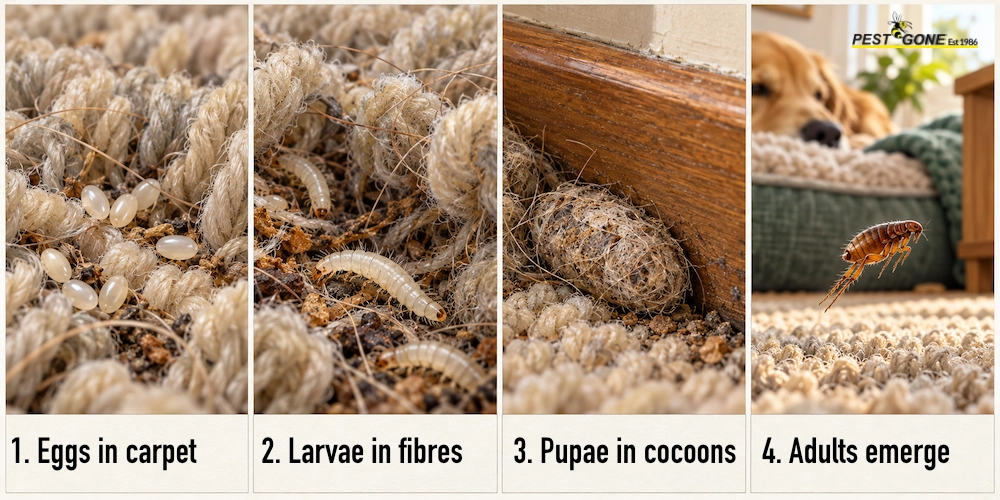
Fleas carried indoors by pets during summer can stay unnoticed for weeks, only becoming obvious when autumn arrives. Indoors, warmth can support further flea development, while adults remain sheltered in cocoons until conditions encourage their emergence.
Removing visible fleas alone may not stop an infestation, as immature stages can remain hidden and develop into adults. Effective flea control must address both pets and their surroundings to prevent the problem from continuing.
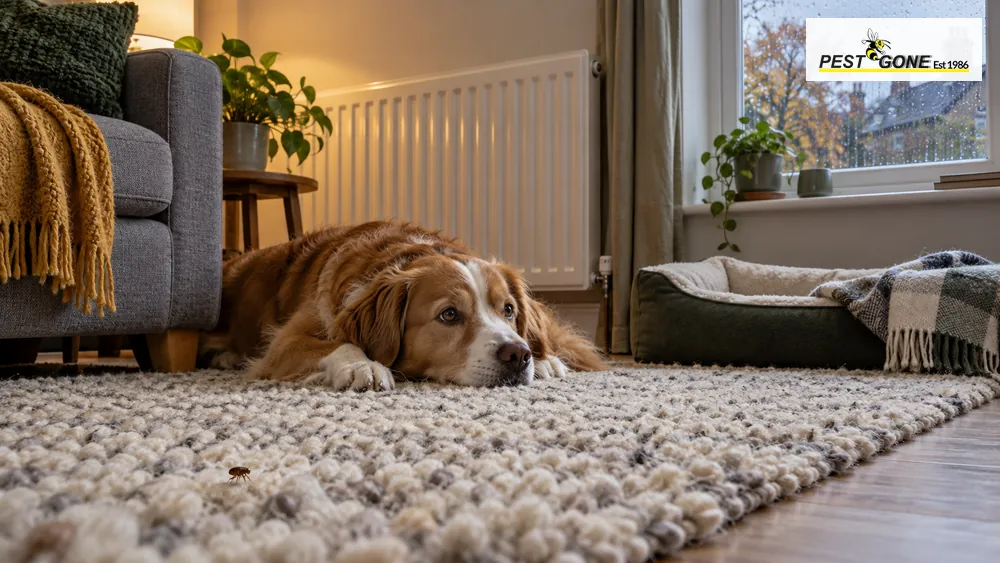
As autumn evenings grow colder and wetter, pets often spend more time indoors, curling up on sofas, rugs and warm bedding. While these habits keep them comfortable, their favourite resting spots can also collect flea eggs, allowing an existing infestation to spread throughout the home.
Flea prevention can also slip when summer ends, especially when owners assume colder weather will eliminate the problem. However, fleas can remain active in heated homes, making it important to follow veterinary advice on suitable protection for every pet and never use dog flea treatments on cats.
Finding fleas in one room does not necessarily mean the problem stops there. As infested pets move between bedrooms, lounges and hallways, flea eggs can fall into carpets, rugs and furniture, creating new areas where larvae develop unnoticed.
This is why checking only your pet’s favourite sleeping spot may leave other affected areas untreated. Pay attention to rooms your pets regularly visit, including spaces where they occasionally nap, and wash shared blankets or removable bedding to help limit the spread of fleas throughout your home.
Even homes without pets can develop flea problems, especially when previous occupants kept animals. Flea eggs and pupae may remain hidden in carpets, floorboards and furnishings, with waiting adults emerging when people move into a previously empty property.
Visiting pets and nearby wildlife can also introduce fleas, leaving homeowners wondering where the infestation started. Although fleas can bite humans, common cat and dog fleas usually rely on animal hosts to reproduce, making it important to identify the source before choosing a treatment.
Your pet may show signs of fleas before you spot one, especially through frequent scratching, nibbling or excessive grooming. Look for dark specks of flea dirt in their fur, which may leave reddish-brown marks on damp white tissue.
Around the home, watch for tiny jumping insects near rugs, sofas, pet bedding and skirting boards, along with itchy spots around the ankles. Bites alone cannot confirm fleas, so seek veterinary advice for affected pets or medical help for persistent reactions.
A few focused habits can help before fleas become established across a home.
Vacuum carpets, rugs, upholstery and areas where pets frequently rest, then seal and dispose of the vacuum contents outside. Wash pet bedding and blankets according to their care labels, check pets with a flea comb and consult your vet about suitable flea treatments for every animal in the household.

Flea sprays can be risky, so never use household insecticides on pets or treatments meant for other species. Follow product safety instructions and professional aftercare advice, especially when cleaning alone cannot control the infestation.
Professional help may be needed when fleas persist despite pet care and cleaning, affect several rooms, or emerge in a newly occupied property. Repeated bites without a clear source also deserve investigation rather than another round of guesswork.
An assessment considers where fleas are active, how they arrived and how to interrupt their life cycle. Treatment can take time to work through the stages already present, so clear aftercare guidance matters just as much as the first visit.
Spotting fleas shortly after treatment does not always mean it has failed. Fleas protected inside cocoons may continue emerging as adults, even after the surrounding areas have been treated, so some activity can persist while the remaining stages develop.
The key is to follow your pest controller’s aftercare instructions and maintain suitable veterinary flea protection for your pets. Avoid applying extra insecticides without professional advice, and contact your technician if activity persists beyond the expected treatment period or shows no improvement.
Fleas in autumn may feel surprising. Yet a heated house can remain comfortable for fleas while the garden grows colder. What looks like a sudden autumn invasion may actually be a summer infestation finally making itself known.
Checking pets and addressing persistent signs early can prevent a drawn-out problem. You do not need to panic, but you should not rely on cold weather to do the job for you.
We offer professional flea pest control for homes, rental properties and businesses across Bedfordshire, including Bedford and nearby communities. As a family-run local company, its team assesses flea activity, affected areas and likely sources before recommending suitable treatment.
The team offers discreet service with unmarked vehicles and clear preparation and aftercare guidance, so customers know what to expect. Whether fleas affect multiple rooms or keep returning, the aim is to tackle the infestation and reduce the risk of recurrence.
If you are spotting jumping insects, dealing with repeated bites or wondering whether an autumn flea problem is getting worse, you do not have to figure it out alone.
Contact Pest Gone today!