Signs of Fleas in the House: 7 Clues Your Heating Could Be Waking Them Up
Spot the 7 signs of fleas in the house, from itchy bites to scratching pets. Learn how central heating affects flea activity and when to seek expert help.
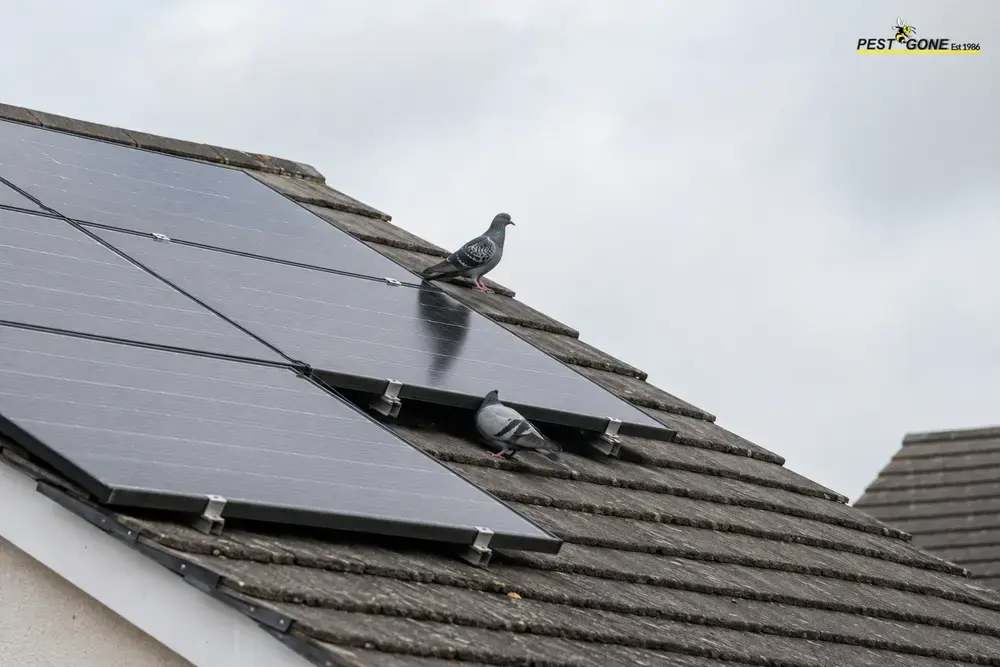
TL;DR: Solar panels can create sheltered, elevated spaces that pigeons find ideal for roosting and nesting. Long-term control usually depends on identifying active nesting, addressing access points safely, and using suitable proofing to prevent birds from repeatedly returning beneath the panels.
Key Takeaways
Solar panels are designed to use empty roof space, but the area underneath can unintentionally attract pigeons too. If you notice birds landing on the roof, cooing overhead, or disappearing beneath the panels, they have likely found a sheltered and safe place.
A solar array provides height, shelter, and protection, making pigeons nesting under solar panels a recurring issue often. The good news is that this behaviour is driven by specific conditions and understanding them is the first step toward resolving the problem effectively.
Solar panels themselves are not what attracts pigeons, but rather the sheltered gap created between the panels and the roof. Narrow space offers protection from wind rain and disturbance while keeping birds elevated above ground activity nesting site
Pigeons are well adapted to urban environments, thriving on elevated structures that resemble their natural sheltered nesting sites. Roofs, ledges, bridges, and similar structures mimic some of the sheltered, raised nesting areas the birds naturally use.
A roof therefore already has several advantages before solar panels are added. Once a covered space is created above part of that roof, pigeons may gain an even more attractive place to settle where people and many potential threats are unlikely to reach them easily.
An exposed roof does not provide much protection from changing weather, but the underside of a solar panel creates a cover. Birds can tuck themselves beneath the array instead of sitting completely exposed.
That does not mean every property with solar panels will develop a pigeon problem. However, when a suitable gap is combined with nearby food, water, quiet roof areas, and regular pigeon activity in the neighbourhood, the property can become particularly appealing.
People generally do not spend much time on their roofs which work in pigeons’ favour overall across properties. A bird that can land, shelter, and leave without being disturbed may quickly learn that the site is reliable.
Repeated visits matter because a roof that begins as a convenient resting spot can eventually become a regular roosting or nesting location. Once that behaviour is established, occasionally frightening the birds away is unlikely to change what makes the space attractive in the first place.
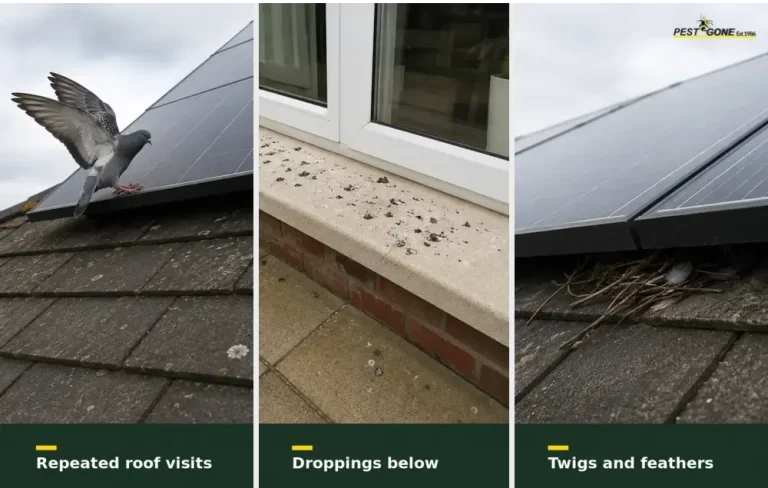
You do not need to climb onto the roof to notice pigeons using space beneath your solar panels. One of the clearest signs is repeated activity in the same part of the roof, such as pigeons landing on panel edges before moving underneath or returning at similar times each day.
Droppings on patios, windows, paths, cars, and walls, plus twigs and feathers, indicate nearby nesting activity is present. Noise is another clue, with regular cooing, scratching, or movement above indicating birds spending extended time in shelter.
Pigeons under solar panels are sometimes ignored because the birds initially seem harmless. The difficulty is that an established nesting or roosting area tends to produce more than noise.
Where pigeons regularly gather, droppings can accumulate around the areas they use and beneath their flight paths. That can create an unpleasant cleaning problem around roofs, gutters, walls, windows, paths, entrances, and outdoor living areas.
Large or repeated accumulations should be approached carefully rather than brushed up casually. Professional guidance notes that dried pigeon droppings can release airborne particles, so precautions are needed when removing significant fouling.
Pigeon nests are simple, loosely built structures made from twigs, feathers, and other readily available materials found nearby. Twigs, feathers, and other debris can still build up beneath panels and around nearby roof or gutter areas over time.
The issue becomes more noticeable when birds repeatedly use the same location. Old material may remain while fresh nesting activity adds more debris, particularly where the space is difficult to inspect from below.
Pigeons do not need an invitation to return to a location that continues giving them what they need. If shelter and access remain unchanged, simply chasing birds away today does little to make the roof less attractive tomorrow.
That is why persistent pigeon activity should be viewed as an access and habitat problem rather than just a problem with individual birds.
Finding nesting material under a panel can make removal seem like the obvious answer, but it is not always a simple DIY fix. Clearing a nest does not close the gap that attracted the birds, so pigeons can quickly return if access remains.
Active wild bird nests are also legally protected under the Wildlife and Countryside Act 1981, meaning they cannot be disturbed while in use. RSPB advises leaving active nests until young people have fledged, as pigeons can nest year-round, so assess carefully first.
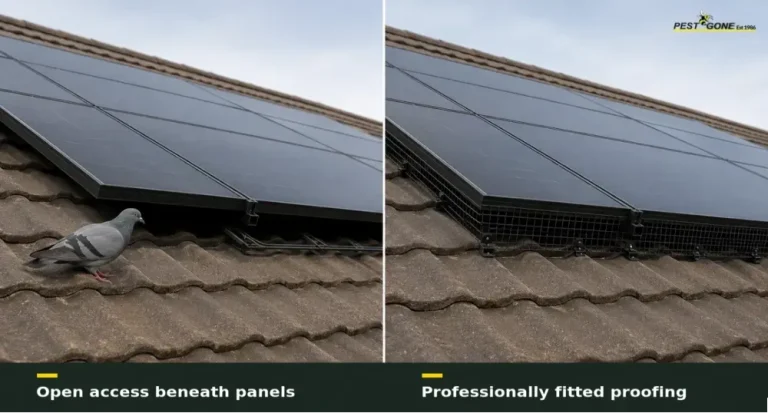
Solar panel proofing generally works by closing the accessible perimeter beneath an array while leaving the panels themselves in place. The aim is straightforward: make the sheltered space unavailable rather than repeatedly trying to persuade pigeons to leave it.
A suitable system needs to account for the shape of the roof, panel layout, gaps around the installation, and areas pigeons are actually using. Simply covering the most obvious opening may achieve little if another accessible route remains.
A roof containing solar equipment is not an ideal place for trial-and-error DIY work. Working at height creates an obvious safety concern, while careless fitting around panels, wiring, roof tiles, and mounting equipment can create additional problems.
Homeowners should also avoid assuming that any piece of mesh or improvised barrier is suitable. Effective proofing needs to block the birds without trapping them underneath or creating unnecessary interference with the existing installation.
Fake predators, reflective objects, noises, and similar deterrents may discourage pigeons, but their effectiveness depends on the environment and bird pressure. In many cases, pigeons quickly become accustomed to these measures and continue using the same sheltered space.
A pigeon with access to a familiar nesting site is often willing tolerate short-term disturbance, especially if it offers safety and shelter. This is why professional bird control focuses more on proofing and physical exclusion, ensuring pigeons cannot access the area in the first place.
Observe from ground level where pigeons land, disappear under panels; droppings collect, and nearby food sources. Before going anywhere near the roof, you can safely:
The most useful time to think about prevention is not after another season of droppings, noise, and nesting material has built up. Once pigeons are repeatedly showing interest in the roof, the underlying access issue needs attention.
After confirming that nesting activity can be safely and legally addressed, proper proofing can make the space beneath the panels inaccessible. Ongoing monitoring is still important, as pigeons may test nearby roof edges or other sheltered areas.
When birds are repeatedly disappearing beneath solar panels, dealing with what can be seen from the ground only tells part of the story. Pest Gone provides pigeon and bird control across Bedfordshire, Milton Keynes, and surrounding areas, including roof and solar panel issues.
The focus is on why birds return, identifying nesting or roosting activity, checking access points, and recommending suitable control or proofing measures. This is especially useful when activity is established, or when nests beneath the panels may still be active.
If pigeons keep returning to your solar panels, chasing them away again won’t help while the shelter underneath is still accessible. Getting the roof checked and using the right control or proofing can solve the issue and reduce the chance of pigeons returning.
Contact Pest Gone Now!