What to Do When You Find a Wasp Nest Near Your Bedford Property
Found a wasp nest near your Bedford home? Learn how to stay safe, spot active nests, and when to call professional pest control for effective removal.

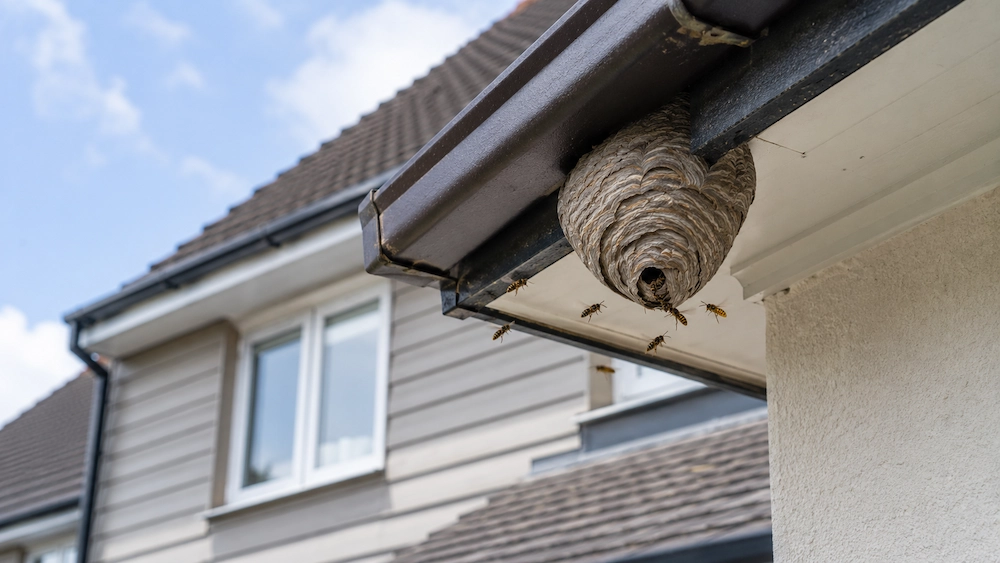
TL;DR: If you find a wasp nest near your home, avoid disturbing it and keep people and pets away from the area. Professional treatment is the safest and most effective way to deal with an active nest, especially if it’s close to your property or regularly used spaces.
Key Takeaways
Finding a wasp nest near your home can be unsettling, especially when wasps are gathering around doors, windows, sheds, or areas where children and pets spend time. Although your first instinct might be to get rid of it straight away, disturbing a nest without the right equipment or experience can increase the risk of stings and make the problem harder to manage.
The best thing to do is keep a safe distance and avoid interfering with the nest. Even a small-looking nest can be connected to a much larger colony hidden in a loft, wall cavity, roofline, or garden structure. In this guide, we’ll walk you through the safest next steps, common mistakes to avoid, and when it’s time to contact Pest Gone for professional wasp nest treatment.
Seeing a wasp nest can be unsettling, but staying calm is important. Wasps are usually focused on their nest and are more likely to react if they feel threatened. Move away slowly, avoid swatting at wasps, and don’t try to get a closer look at the nest.
If it’s safe to do so, let everyone in the property know where the nest is and keep people away from the area, especially if it’s near a doorway, patio, pathway, play area, pet enclosure, or business entrance. A wasp nest is often manageable when left alone, but disturbing it can quickly turn it into a safety issue.
You don’t always need to see the nest to know there’s a problem. Many nests stay hidden throughout the season, so it’s often more useful to watch for repeated wasp activity in the same area from a safe distance.
Signs of a nearby nest include:
A few wasps in the garden doesn’t always mean there’s a nest on your property, as they may simply be looking for food. However, if you notice them repeatedly returning to the same location, there’s a good chance a nest is nearby.
If you can safely observe where they’re coming and going, make a note of it. This information can help a pest control technician assess the situation more quickly and accurately.
Many people think sealing the hole where wasps are entering will solve the problem, but it often creates new issues. If their usual entrance is blocked, wasps may search for another route and end up entering loft spaces, wall cavities, vents, or even living areas.
Avoid using foam, sealant, tape, cement, cloth, expanding filler, or any other material to block the entrance. Leaving it untouched allows a professional to treat the nest properly without causing additional complications.
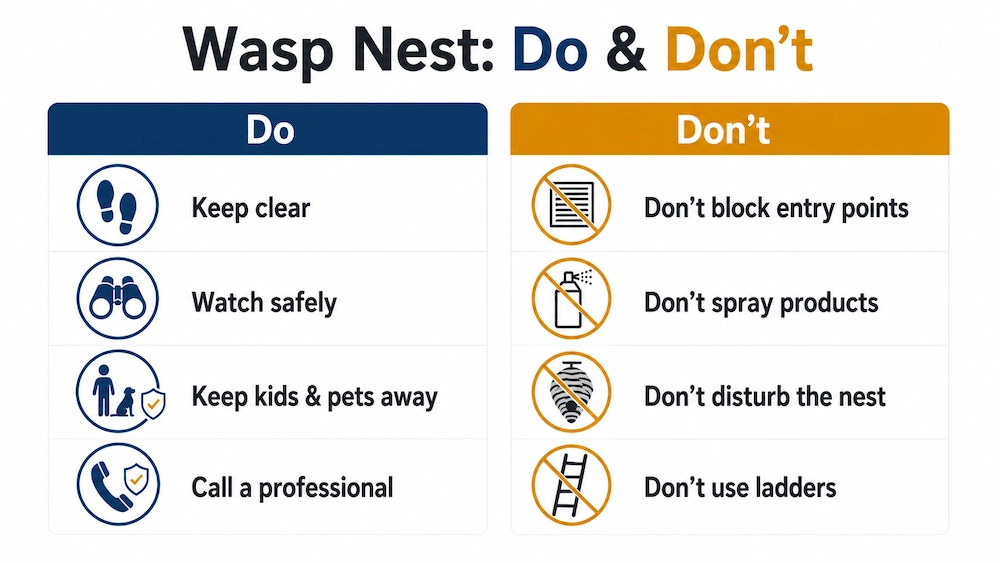
A nest that looks small can still contain a large number of wasps, and disturbing it can trigger a defensive response from the colony. Trying to knock down, scrape, cut, shake, or remove a nest can quickly lead to swarming and increase the risk of multiple stings.
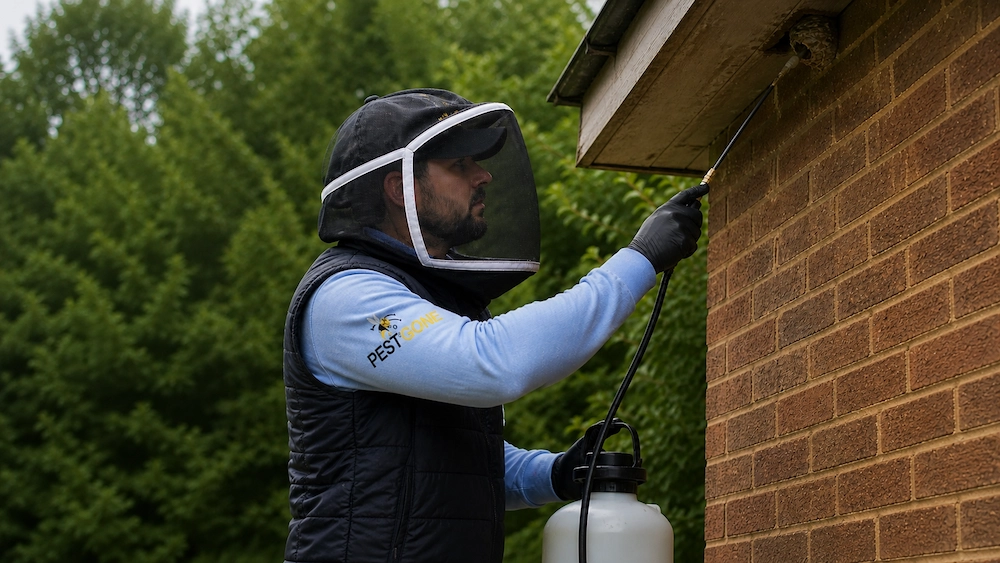
The danger is even greater when nests are located in lofts, sheds, roof spaces, or elevated areas that require ladders. In addition to stings, there is also a risk of falls and injuries, which is why professional treatment is always the safer option.
DIY wasp sprays and powders are widely available, but they aren’t always effective. Many nests are hidden inside walls, roof spaces, or other hard-to-reach areas, meaning treatment may only affect a few worker wasps while leaving the main colony untouched.
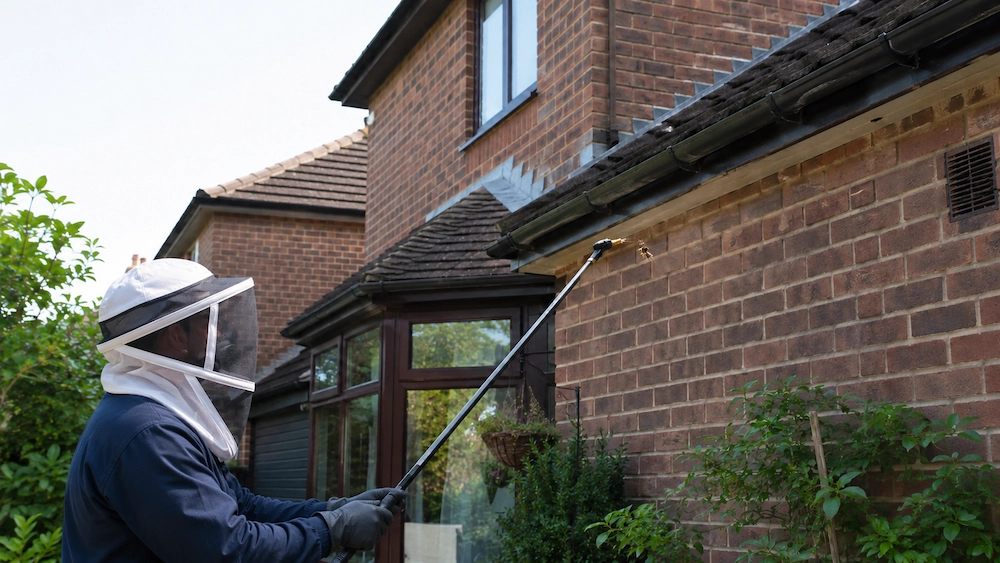
Without knowing exactly where the nest is located or how large it has become, it’s easy to waste time and money while the problem continues. Professional treatment involves identifying the nest location, assessing risks, and applying the correct treatment where it will be most effective.
Children and pets are naturally curious and may accidentally disturb a nest without realising the danger. Dogs may chase wasps, cats may try to catch them, and children may play too close to an active nest.
Until the nest has been treated, keep children and pets away from the area. If the nest is near a shared pathway, school route, outdoor seating area, rental property, or business premises, arranging treatment sooner rather than later is usually the safest approach.
While this won’t remove the nest itself, it can help reduce wasp activity around people. Keeping bins closed, clearing away food waste, wiping down outdoor tables, and avoiding uncovered sugary drinks can make your outdoor spaces less attractive to wasps.
If you have fruit trees, remove fallen fruit where possible and clear away leftovers promptly after eating outside. Pet food should also be brought indoors once feeding time is over to minimise unnecessary wasp activity.
Photos can be useful when contacting a pest control company, but only if they can be taken safely. Never climb into lofts, stand directly under a nest, remove panels, or get close to an active entry point just to take a picture.
If the nest is visible from a safe distance, a quick photo may help. If not, a clear description of the activity is usually enough for a technician to understand the situation.
When reporting a suspected nest, try to provide:
This information helps the technician understand the situation before arriving.
Not every wasp sighting needs professional treatment. Seeing a few wasps around flowers, fruit trees, or bins is normal during warmer months and doesn’t necessarily indicate a nest nearby.
However, if activity is concentrated in one location, increasing over time, or affecting how you use your property, it’s usually best to seek professional advice before the problem becomes more disruptive. A qualified pest control professional can safely assess and treat active nests in homes, gardens, lofts, sheds, and commercial premises.
The longer an active nest is left, the more disruptive it can become. Dealing with it early is usually the safest option.
When you’re dealing with a wasp nest, you want clear advice, reliable service, and a solution that works. At Pest Gone, we provide professional wasp pest control for homeowners, landlords, letting agents, and businesses across Bedfordshire, Milton Keynes, and surrounding areas.
As a family-run company with more than 30 years of experience, we take a practical approach to pest control, offering honest advice, safe treatment methods, and a straightforward service designed to make the process as stress-free as possible.
Don’t leave an active wasp next to chance. Speak to the friendly local team, explain what you’ve seen, and get clear advice on the best next step.
Call Pest Gone today or get in touch to arrange fast and effective wasp nest treatment from a trusted local pest control company!