Signs of Fleas in the House: 7 Clues Your Heating Could Be Waking Them Up
Spot the 7 signs of fleas in the house, from itchy bites to scratching pets. Learn how central heating affects flea activity and when to seek expert help.

TL;DR: If you find a wasp nest near your Bedford property, don’t panic but don’t ignore it either. Keep your distance, avoid disturbing the nest, and make sure children and pets stay well away. If the nest is close to your home or poses any risk, it’s best to get professional pest control advice.
Key Takeaways
Finding a wasp nest near your Bedford property can be a bit unnerving, especially if you start noticing wasps buzzing around doors, windows, or outdoor spaces where you spend time. While wasps do play a role in nature, having a nest too close to your home can quickly become a problem.
The key is to stay calm and take sensible precautions. In most cases, avoiding the nest and getting expert advice is the safest way forward. Here’s what you should know.
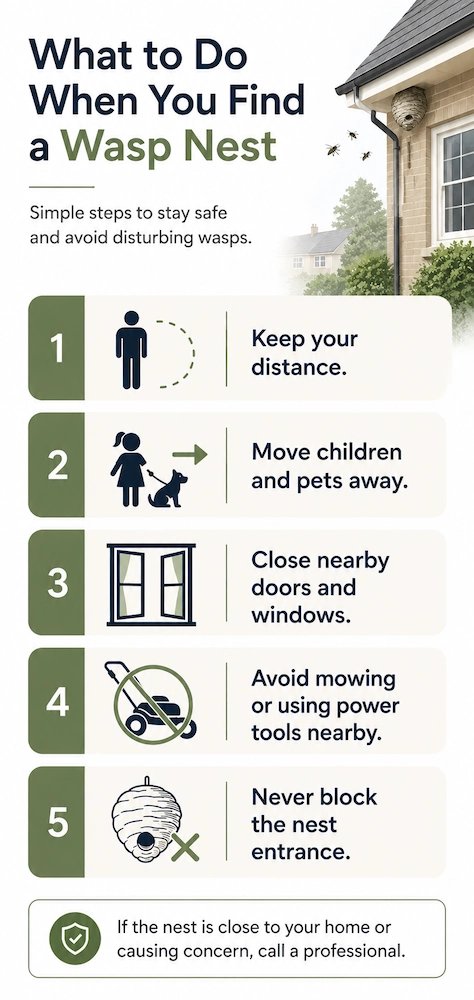
First things first; give the nest plenty of space. It might be tempting to take a closer look or try to figure out how big it is, but that’s not a good idea. Wasps can become defensive if they feel threatened, and getting too close could lead to stings.
Try to keep children and pets away from the area, and avoid activities that might disturb the nest, like mowing the lawn or using power tools nearby. If the nest is near a doorway or path, consider using an alternative route for the time being.
Not all wasp nests are active, especially outside of the warmer months. However, it’s not always easy to tell from a distance.
Signs of an active wasp nest
You might notice:
If you’re unsure, it’s best not to investigate too closely. A professional can safely confirm whether the nest is active.
It might seem like a quick fix to block the hole where wasps are entering, but this can actually make things worse. If their usual route is sealed, wasps may look for another way out, sometimes ending up inside your home.
Leave the entrance alone until the nest has been properly treated. Once the activity has stopped, you can look at sealing any gaps with professional advice.
If the nest is near a space you use regularly, it’s worth adjusting your routine for a while. This helps reduce the chance of accidental disturbance.
You might need to:
If the nest is near a business or public area, it’s even more important to act quickly to reduce risk.
While removing food sources won’t get rid of a nest, it can help reduce how many wasps are hanging around your property.
Make sure bins are sealed properly, clean up spills quickly, and keep food covered when eating outside. Fallen fruit in the garden can also attract wasps, so it’s worth clearing that away regularly.
You might be wondering why wasps picked your property in the first place. In most cases, it comes down to shelter and convenience. Wasps look for quiet, protected spaces to build their nests; such as roof eaves, lofts, sheds, wall cavities, or dense hedges; and properties with small gaps or undisturbed areas can be especially appealing.
They’re also attracted to easy food sources. Gardens with fruit trees, outdoor dining areas, or accessible bins can draw them in. By understanding these factors, you can take simple steps to reduce the chances of future nests, such as sealing gaps, maintaining outdoor spaces, and managing waste properly.
Knowing where wasps are most likely to build can help you spot a problem early and take action before it becomes more serious. In Bedford properties, nests are often found in sheltered, undisturbed areas that provide protection from weather and predators.
Some of the most common locations include:
Regularly checking these areas, especially during spring and early summer, can help you identify early nest activity. Smaller nests are easier to manage when addressed promptly, and spotting them early reduces the risk of a larger infestation developing later in the season.
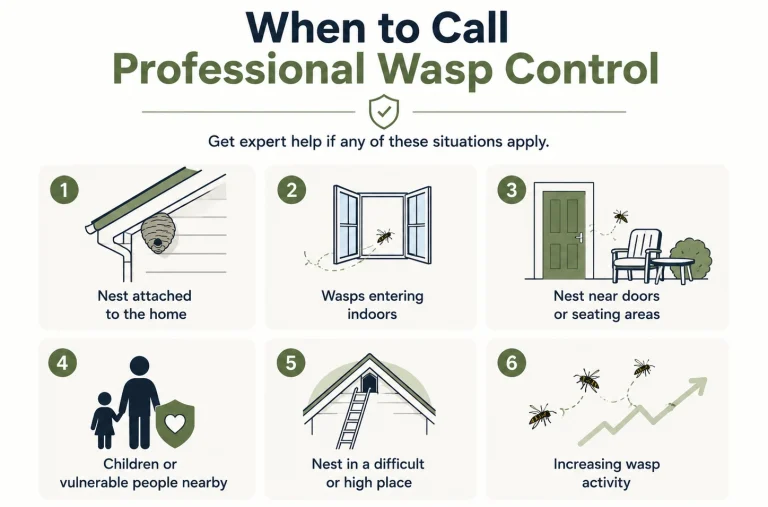
Not every wasp nest needs immediate treatment, especially if it’s far away from people. But if there’s any risk, it’s best to get expert help.
You should contact a pest control company if:
If you’re dealing with a nest locally, you can explore support options through this Bedford wasp removal service.
DIY solutions might seem like a quick fix, but they often don’t solve the problem and can make it worse. Sprays and home remedies can disturb the wasps without eliminating the nest, increasing the risk of stings.
In some cases, incorrect treatment can cause wasps to spread further into your property. Professional pest control ensures the nest is handled safely and properly.
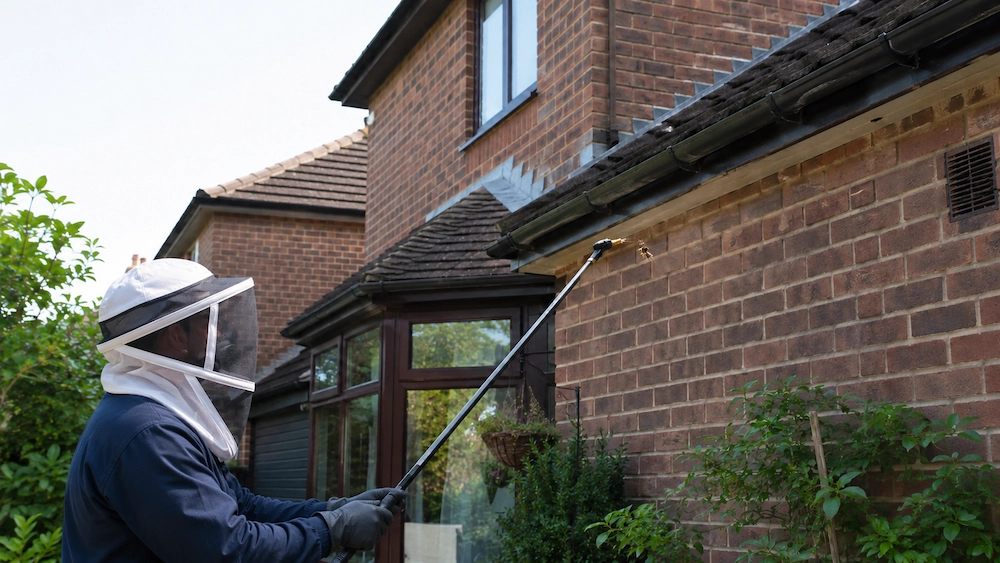
A professional service starts with a careful assessment to locate the nest and understand the level of activity.
The technician will inspect the area and explain what needs to be done. You’ll also get clear guidance on how to stay safe during and after treatment.
Treatment is applied directly to the nest or entry point using specialist methods. This allows the treatment to reach the colony effectively.
After treatment, you may receive advice on preventing future nests and what to do if you notice any further activity.
Do not remove the nest or seal entry points immediately, as some wasps may remain active for a short time. Follow the technician’s instructions, monitor the area, and avoid repairs until activity has stopped.
If wasps persist, contact the pest control company rather than attempting further treatment yourself. If someone develops severe symptoms after a sting, such as breathing difficulty or throat swelling, call 999 immediately and refer to NHS guidance.
Dealing with a wasp nest can be stressful, especially when it’s close to your home. With Pest Gone experienced team on your side, we can make the process much easier. As a family-run business, we have over 30 years of experience.
We carry out treatments with care for people, pets, and the environment. We’ll explain what to expect before and after the visit, and our full guarantee on wasp treatments gives you peace of mind if the problem continues.
A wasp nest near your home or business should not be handled alone. Keep your distance, protect others, and seek professional advice to manage the situation safely.
Contact the team today for reliable wasp nest treatment in Bedford and surrounding areas.