Signs of Fleas in the House: 7 Clues Your Heating Could Be Waking Them Up
Spot the 7 signs of fleas in the house, from itchy bites to scratching pets. Learn how central heating affects flea activity and when to seek expert help.

TLDR: Recurring ants usually mean a colony has found a steady route between outdoor shelter and indoor sources like food, moisture, or warmth. Reducing the problem requires looking beyond worktops, checking patios door gaps, removing attractants, breaking scent trails before ants establish paths.
Key Takeaways
Ants in the kitchen can make any home or business difficult to manage when they keep returning repeatedly. While the kitchen is often blamed first, recurring ant activity usually begins outside and travels through patios, doors, wall gaps.
The real issue is usually not one missed crumb or one open packet of food. Ants return because they have found a reliable path to food, moisture, warmth, or shelter, and unless that wider route is broken, the same problem can appear repeatedly.
When ants appear on worktops, skirting boards, or bins, they are foragers representing a larger colony searching for food sources. When colony remains active and route is useful, wiping ants away never stops returning trails.
A clean kitchen can still attract ants due to hidden food, damp areas, or nearby entry points present. Ants also leave scent trails that others follow, so while normal cleaning helps, the activity can return if the full route and source are not properly addressed.
Treating visible ants is less useful than finding their source, as trails often start under slabs and enter indoor areas. Following the route clarifies the problem, showing how outdoor conditions and indoor attractions combine instead of guessing in the kitchen.
Patios often start ant problems in homes, rentals, and businesses due to slab gaps, cracks, warm nesting areas. While not every patio issue needs major work, repeated indoor activity signals outside areas near doors and kitchens require checking.
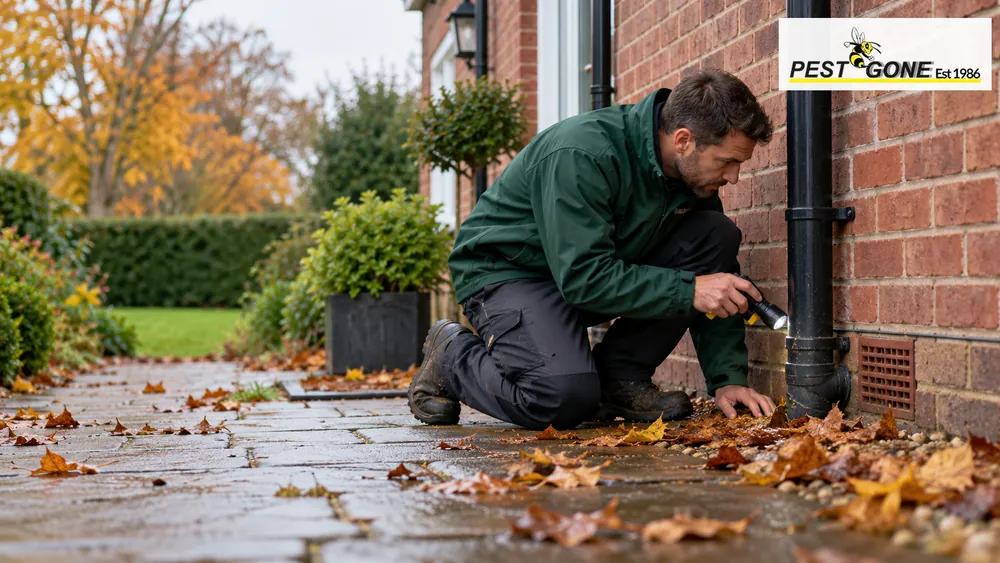
Start by observing where ants move without disturbing them, focusing on paving joints, cracks, drains, steps, thresholds and exterior walls. If ants repeatedly travel from patio to door or wall gaps, note route to identify outside colony or indoor attractant.
Plant pots, compost bags, garden storage, timber, and stacked items hold moisture and create sheltered areas near buildings. Leave clear gaps around doorways and exterior walls to expose trails, reduce shelter, and discourage patios becoming ant routes entirely.
Outdoor dining areas are often overlooked after meals, leaving spills from drinks, sauces, fruit, and packaging on paving surfaces to remain. Bins and recycling boxes need regular attention near back doors, keeping lids closed and areas clean when necessary.
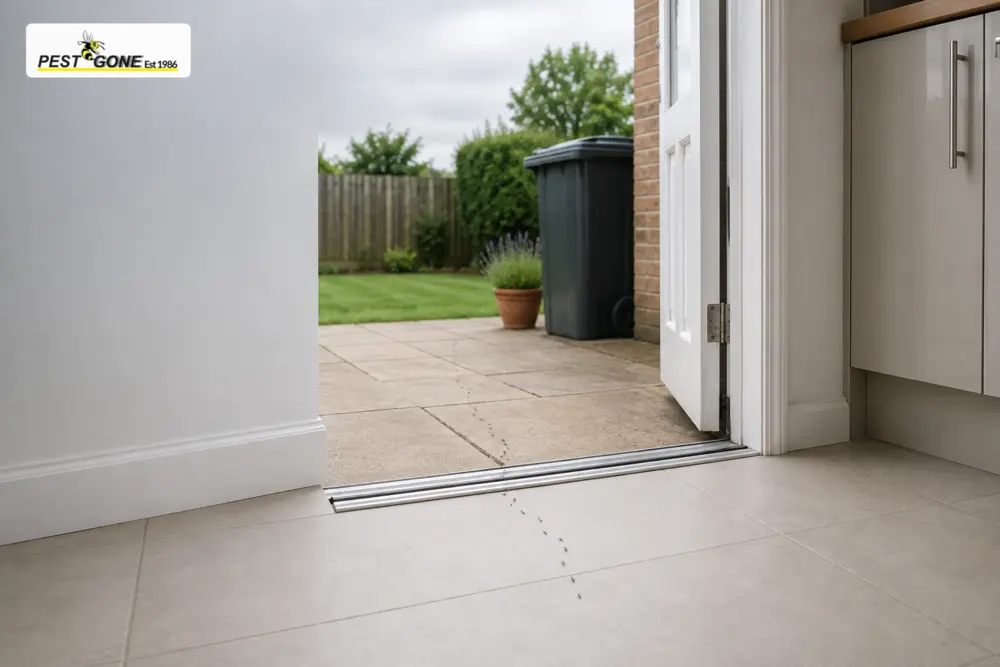
Ants can enter buildings through tiny gaps including worn thresholds, cracked seals, frames, pipes, damaged silicone, and creating trails. This is especially common around kitchens, utility rooms, garden rooms, cafés, staff areas and food storage spaces indoors.
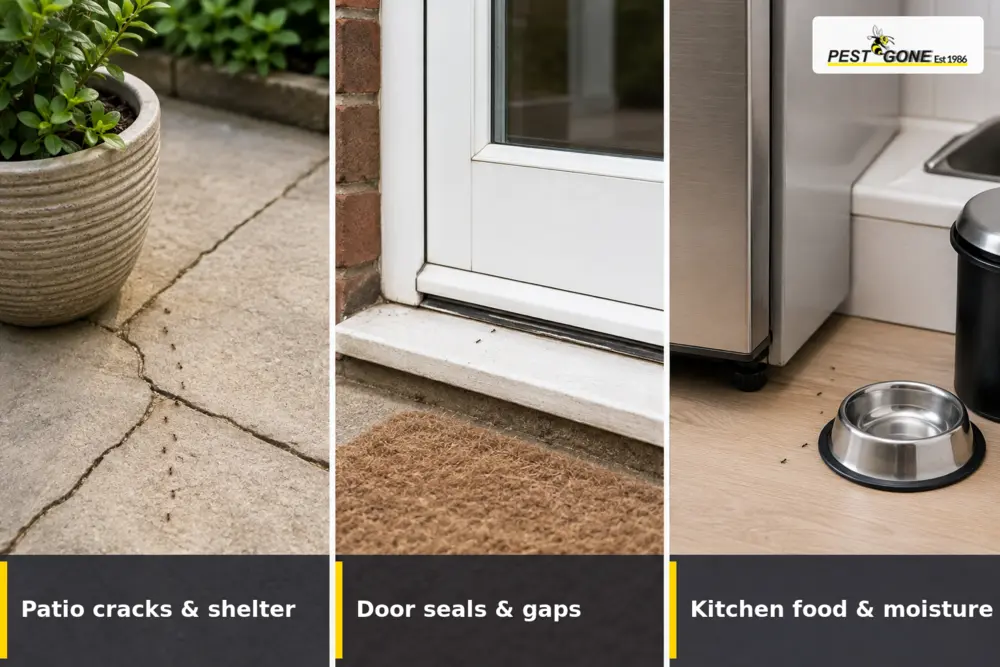
Check bottom of external doors where seals meet floor; visible light, cracks, gaps, or wear may indicate ant entry point. It also helps to slowly inspect the frame, threshold, brickwork, and render because ant routes are often missed at quick glance.
Filling gaps can reduce ant access, but sealing active routes before locating the nest may simply shift activity elsewhere in the property. A more effective approach is to work through the problem step by step:
Although the kitchen is not always the root cause it can still attract ants by providing food water warmth shelter. The goal is not to over-clean or make the space difficult to use, but to remove the small rewards that keep encouraging ants to follow the same path.
Worktops are only part of the issue because ants find food residue in hidden areas beneath appliances, kickboards, bins, and cupboards. Sticky patches and grease attract ants, so moving appliances and cleaning underneath helps reduce recurring activity in affected areas significantly.
Sugar, cereal, flour, biscuits, dried fruit, pet food, and snacks should be kept in sealed containers, as even “closed” packaging can still leak food traces. Fruit bowls should be checked regularly in warm weather as overripe fruit and juice attract ants near trails.
Ants are not only seeking food but are also attracted to water sources such as sinks, leaks, damp surfaces etc. Fixing small leaks, drying wet areas, and removing standing water helps reduce ants returning after food is cleaned.
Once ants establish a route, they return repeatedly because scent trails guide them, so prevention begins by observing patterns first. It can be tempting to spray them straight away, but watching movement reveals entry points and pressure areas.
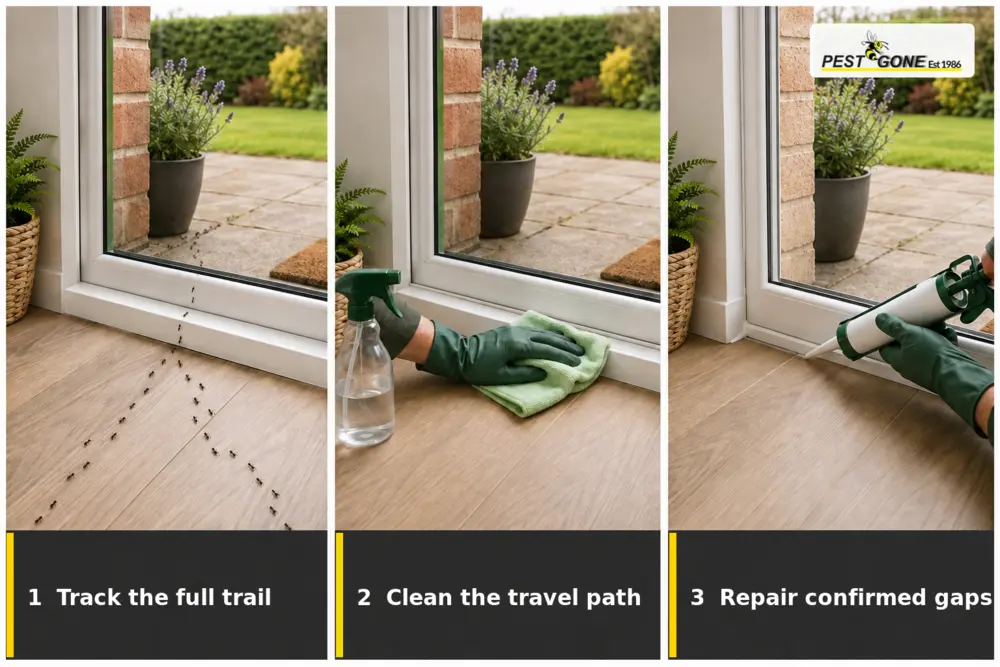
Observe where ants enter, travel, and gather, then follow pattern to identify any door frames, walls, gaps, or food sources. In homes this is often back doors, skirting boards, patio thresholds; in businesses delivery entrances, kitchens, bins, storage, food areas.
Once you have identified the route, clean the full trail rather than only the areas where ants are most visible, which are often found along:
Use an appropriate household cleaner, avoid mixing products, and take care in food areas around surfaces, children, pets, stored ingredients.
Using multiple shop-bought products together can confuse treatment, fail to address source, and create safety risks around food, pets, children. Follow label instructions and keep products away from food, pets, and children. If ants keep returning, a targeted treatment may be needed.
Prevention works best as part of regular property care rather than a one-off reaction, reducing conditions that attract ants early. For homeowners, tenants, landlords, and businesses, regular patio and door checks during warmer months should be part of routine maintenance.
Check bins, pet feeding areas, sink edges, appliance bases, cupboard corners, and skirting boards for hidden food or water sources. It also helps to check for fresh trails at same time daily since ants are more visible in warm conditions.
Inspect paving cracks, patio joints, wall edges, drainage points, door thresholds, and bin areas, moving damp items away. You do not need to make the outside space perfect; you simply need to reduce the conditions that make nesting, feeding, and travelling easy.
Ant activity increases during warmer weather as colonies expand especially around patios open doors and outdoor meals areas. During warmer periods, check patios and kitchens regularly to spot early signs and prevent ant routes becoming established quickly entirely.
At some point, cleaning and simple repairs are no longer sufficient to resolve recurring ant problems effectively alone. If ants appear in multiple rooms, return after cleaning, or emerge from hidden areas, nest may be inaccessible. In these situations, professional ant pest control can help identify the source and apply a targeted treatment.
In commercial spaces, this becomes even more important because recurring ant activity can affect hygiene, staff confidence, and customer trust. When the source is unclear or DIY treatments fail, inspection identifies origins and guides more effective treatment plans.
Pest Gone helps homeowners, landlords, tenants, and businesses across Bedfordshire, Milton Keynes, and nearby areas manage ongoing ant problems effectively. As a family-run pest control service with over 30 years of experience, our focus is on treating sources, not visible ants.
Our service involves assessing the property, identifying the level of activity, and applying a targeted treatment plan that fits the situation. This includes tracing indoor and outdoor routes, treating colonies when needed, and providing prevention advice to reduce recurrence.
If ants keep coming back around your patio, doors, or kitchen, it is worth acting before the route becomes firmly established. Repeated ant activity is rarely solved by wiping alone, as the real issue is the route from outdoors to indoor attraction.
Contact Pest Gone now!