Signs of Fleas in the House: 7 Clues Your Heating Could Be Waking Them Up
Spot the 7 signs of fleas in the house, from itchy bites to scratching pets. Learn how central heating affects flea activity and when to seek expert help.

TL;DR: Scratching, droppings, smells, or gnaw marks in hidden areas often mean rodents are using your property for shelter, food, or movement. The sooner the activity is checked, the easier it is to find the source and stop the problem spreading.
Key Takeaways
That scratching above the ceiling or behind a wall might seem harmless at first, but it can be an early sign that rats or mice are active in hidden parts of the property. Lofts, garages, wall cavities, service voids, and storage areas give rodents the cover they need to move, nest, and stay out of sight.
These signs are worth checking sooner rather than later, especially for homeowners, landlords, and businesses. Hidden rodent activity can point to entry gaps, nesting, contamination, or damage to insulation, stored items, pipework, and electrical cables, so this guide explains what the signs may mean and when professional help may be needed.
Rats and mice do not usually settle inside a property without a reason. If they are active in a loft, garage, or wall cavity, they have likely found warmth, shelter, food, nesting material, or a safe route through the building.
One noise does not always mean there is an infestation, but repeated scratching, droppings, smells, or gnaw marks should be taken seriously. The longer rodents stay hidden, the harder they can be to find and remove.
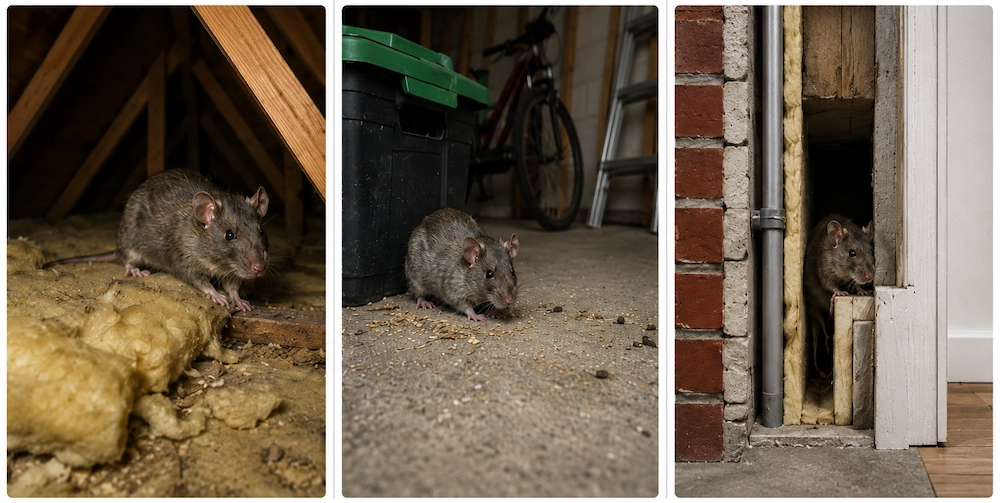
Lofts are ideal for rodents because they are warm, quiet, and rarely disturbed. They may pull apart insulation for nesting and use small gaps around the roofline, soffits, vents, pipe entries, or brickwork to get in, then move unseen above ceilings until scratching becomes hard to ignore at night indoors.
Garages can attract rodents when they contain pet food, bird seed, cardboard, garden products, or clutter. Even a small gap under a door or around pipework can let mice in, and once inside, they may move into wall voids, utility areas, kitchens, lofts, or rooms connected to the main property.
Wall cavities can give rodents hidden routes through a property. They may move between floors, travel from the loft to lower rooms, or reach food without being seen, which makes the problem harder to trace. Scratching in one wall may start from a roof gap, air brick, pipe entry, or garage access.
Rodent noises are often noticed at night or early morning when the property is quiet. Scratching, tapping, scurrying, or dragging can all suggest movement, but sound alone is not enough. Droppings, entry gaps, gnaw marks, smells, nesting material, and the location of the signs all help confirm the problem.
Mice are small, quick, and easy to miss, but their signs can build up fast. Watch for:
Rats are bigger than mice, so their movement often sounds heavier. Watch for:
Gnawing sounds should be checked quickly because rodents may be causing hidden damage. Look out for:
Rodents hide from people, but they usually leave clues behind. Droppings, smells, rub marks, chewed materials, and disturbed insulation often appear near walls, corners, food, pipework, shelving, or gaps. Handle droppings carefully, as contaminated areas can carry hygiene risks and may show where rodents travel or feed.
Mouse droppings are small, dark, and rice-like, while rat droppings are larger and more capsule-shaped. Fresh droppings often look darker and softer, while older ones can look dry or crumbly. Their location matters too, as loft droppings may suggest nesting and garage droppings may point to food or entry routes.
A stale, musky, or ammonia-like smell can be a warning sign of rodents in enclosed spaces such as lofts, cupboards, garages, or wall voids. Smell alone does not prove an infestation, but when paired with noises, droppings, gnaw marks, or disturbed insulation, it should be checked quickly.
Rodents often follow the same paths, leaving greasy marks on walls, beams, pipes, or edges. You may also spot chewed cardboard, shredded paper, damaged insulation, gnawed plastic, torn fabric, or opened food packaging. These signs suggest rodents are not just passing through, but using the space regularly.
Rodents in the loft often mean there are gaps around the roofline, vents, soffits, pipe entries, or brickwork. Once inside, rats or mice can move above ceilings, flatten insulation, chew materials, contaminate stored items, and build nests in corners that are difficult to reach.

Flattened insulation can show where rodents have been moving regularly. Shredded insulation, paper, fabric, or packaging may suggest nesting, especially if it is gathered in corners or tucked behind stored items.
Be careful when checking a loft because droppings, contaminated material, and unsafe footing can create risks. If you suspect rodents are active, avoid rummaging through insulation without proper protection.
Treating the signs inside the loft will not solve the problem if rodents can still get in from outside. A good rodent control plan should look at treatment and proofing advice so the property is less likely to face the same issue again.
This is where DIY treatment often falls short. Traps or bait may reduce the signs for a while, but missed gaps around the roofline, vents, brickwork, or pipework can allow rodents back in.
Rodents in the garage usually mean they have found food, cover, or both. Pet food, bird seed, grass seed, rubbish bags, and dry goods can attract them, especially in soft packaging. Clutter, boxes, fabric, tools, and stacked items also give rats and mice places to hide, nest, and leave droppings.
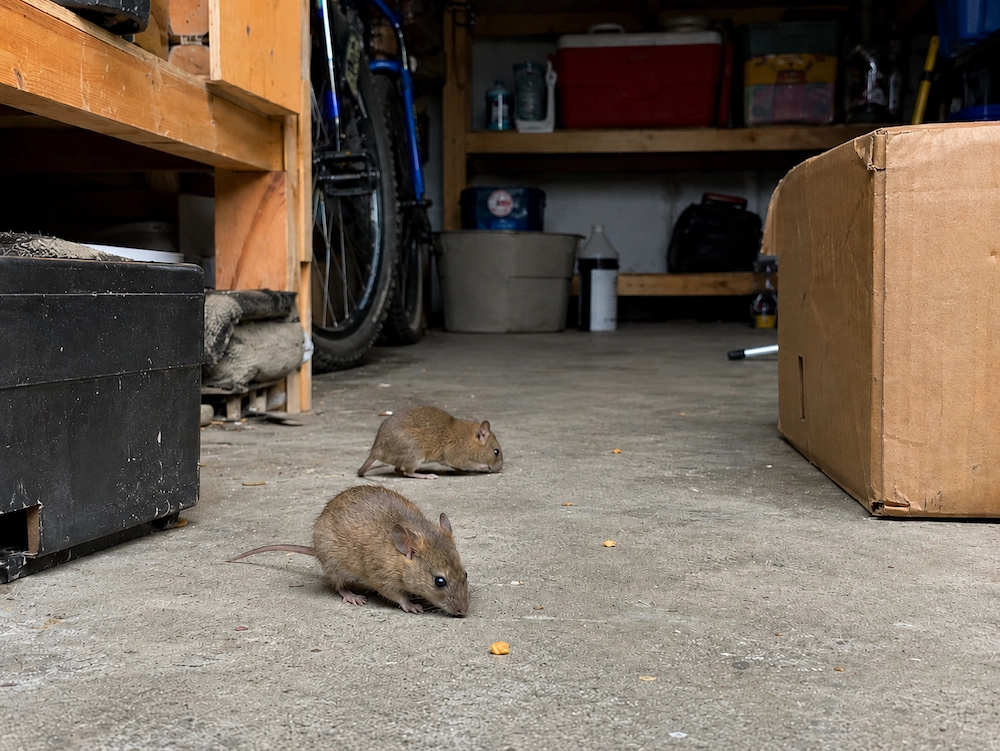
Even a tidy garage can have small gaps around doors, drains, pipes, corners, or brickwork. Rodents are quick to find these openings and will keep using a route once it works. Droppings near edges, shelves, or stored items may mean the entry point is close by.
Garages can become easy feeding spots when pet food, bird seed, cereal boxes, or waste bags are left in soft packaging. Sealed, hard containers can help, but they will not fix an active problem if rodents are already nesting, moving through wall voids, or using hidden entry points.
Here at Pest Gone, we help homes and businesses across Bedfordshire, Milton Keynes, and nearby areas deal with rodent problems properly. As a family-run company with over 30 years of experience, we know how to inspect hidden areas, find likely routes, apply the right treatment, and give clear advice to help stop rats or mice coming back.
Our rat removal service is practical, discreet, and built around your property, not a one-size-fits-all plan. With unmarked vehicles, local knowledge, and safe, ethical methods, we are a strong choice when rodents are active near loft insulation, wiring, food areas, pets, children, commercial stock, or other sensitive spaces.
If you suspect rodents in your loft, garage, wall cavities, or another hidden area, do not wait until the signs become obvious. By the time rats or mice are heard often, they may already be moving through parts of the property you cannot see.
Contact Pest Gone today for professional rodent control!