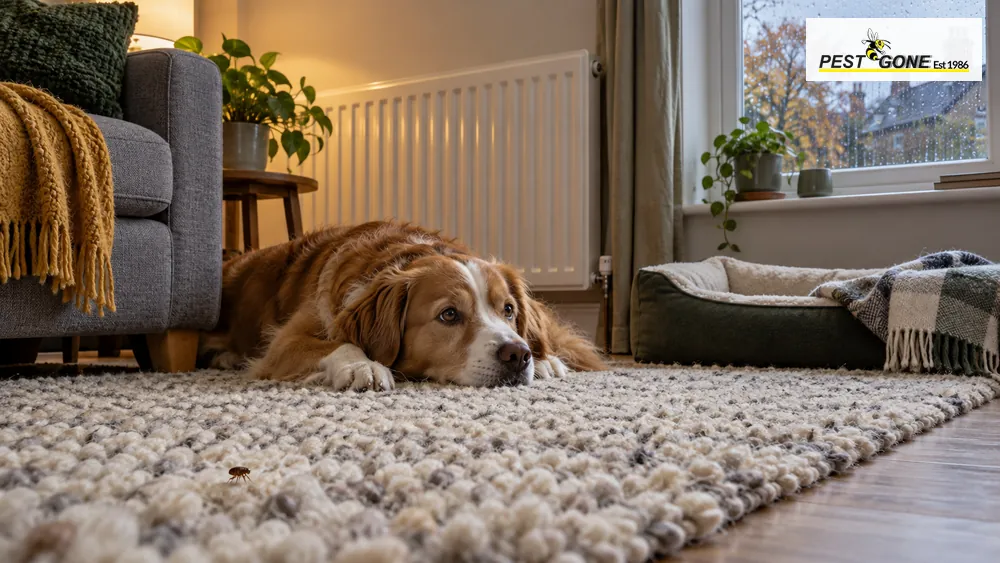
Signs of Fleas in the House: 7 Clues Your Heating Could Be Waking Them Up
Spot the 7 signs of fleas in the house, from itchy bites to scratching pets. Learn how central heating affects flea activity and when to seek expert help.

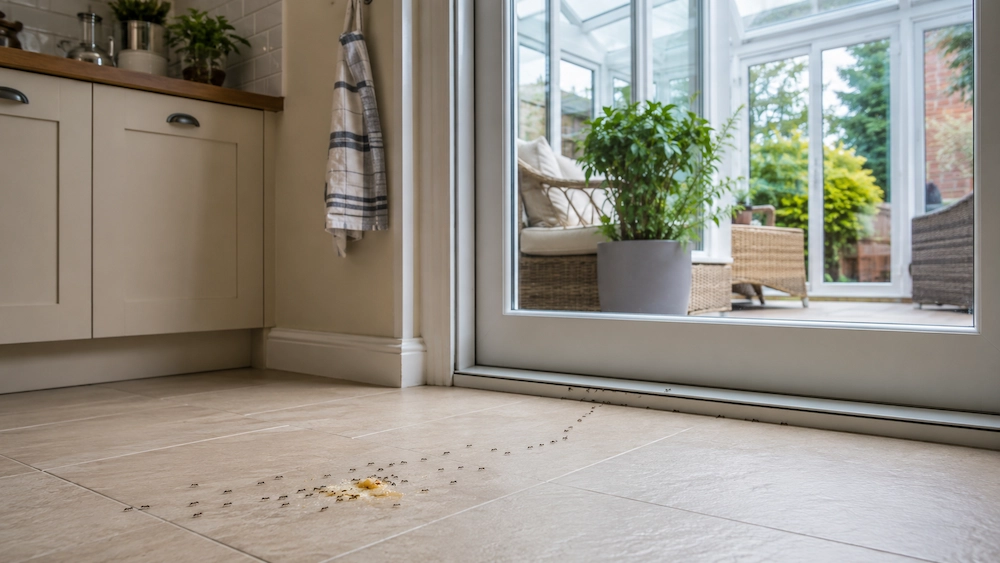
TLDR: Ants keep returning to kitchens and conservatories because they’ve found reliable food, moisture, or easy entry points. Cleaning alone often isn’t enough, as scent trails and nearby nests can keep drawing them back.
Key Takeaways
You clean the worktops, wipe the floor, get rid of the ants, and for a moment it feels like you’ve sorted it. Then the next day, they’re back in exactly the same spot. It’s frustrating, especially when you feel like you’re doing everything right.
If ants keep showing up in your kitchen or conservatory, it’s rarely by chance. They’ve usually found something that’s drawing them in, whether that’s food, warmth, moisture, or just an easy way inside. The upside is that this kind of repeat activity tends to follow a pattern, and once you start to spot what’s attracting them and where they’re coming from, it becomes much easier to figure out what to do next.
Ants are highly organised insects that communicate using scent trails. When one ant finds a reliable source of food or water, it leaves a chemical trail behind so others from the colony can follow the same route. This is why you might notice just a few ants at first, followed by a steady stream later on.
In homes, ants usually appear indoors because they have found something that meets their needs. Even small amounts of food, moisture, or easy access points can attract them and keep them returning to the same spot.
Kitchens are one of the most common places to find ants because they offer exactly what ants are looking for: food and water. Even small amounts of residue, such as crumbs under a toaster or sticky patches near the bin, can be enough to attract them and start activity.
Ants are especially drawn to:
The frustrating part is that the kitchen may look clean to you, but ants can still find tiny food sources that are easy to miss. This is why some homeowners feel like they are doing everything right but still seeing ants return.
Conservatories can be just as attractive to ants as kitchens, but for slightly different reasons. A conservatory is often warm, bright, and close to the garden. That makes it an easy place for ants to enter, especially during spring and summer when colonies are more active.
Ants may enter through:
Potted plants can contribute to the issue, as soil, moisture, and plant debris can attract insects, especially when pots are close to entry points. Because conservatories often sit next to patios, lawns, borders, or garden walls, the nest may be nearby outside and ants may simply be using the conservatory as the easiest indoor route.
Cleaning can help reduce ant activity, but it does not always solve the underlying problem. Ants leave behind scent trails that guide others back to the same food source, which is why they often return even after surfaces have been wiped.
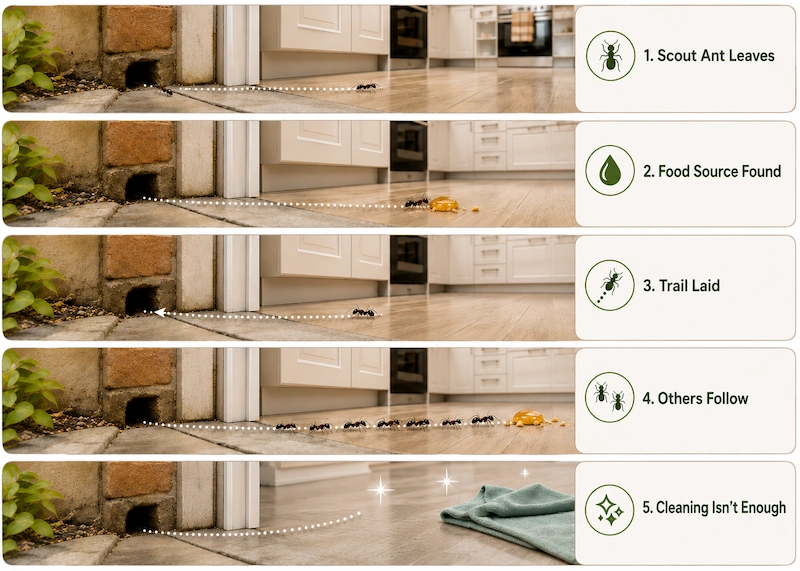
If you’re dealing with this kind of recurring issue, it may help to understand more about how professional ant pest control services work and why targeting the source of the problem is often more effective than surface-level cleaning alone.
Ants do not need a large gap to get inside. A tiny opening can be enough.
Common entry points include:
In many cases, the entry point is not obvious, as ants may come from behind cupboards, under flooring, through a wall gap, or from outside near the foundations. If you keep seeing ants in the same area, watch where they travel, as their route often gives clues about where they are entering.
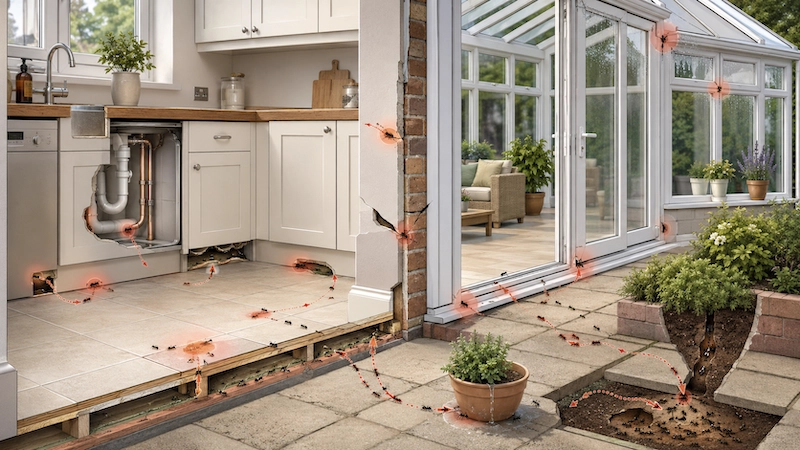
A small number of ants may not always mean there is a serious infestation. However, repeated activity usually means there is a reason they are staying interested in your property.
Signs that the problem may need closer attention include:
If ants are appearing in a kitchen, food preparation area, rental property, or business premises, it is worth dealing with the issue properly before it becomes more disruptive.
Many people try sprays, powders, traps, or home remedies first, which may reduce visible activity for a while, but visible ants are usually only part of the problem. If the colony remains active, the food source or entry route is still present, or the wrong treatment is used, ants may return, and recurring issues often mean the root cause has not been addressed.
A better approach is to look at the full pattern:
Without answering those questions, treatment can become guesswork.
There are a few practical steps you can take before calling a pest control professional. Start by removing anything that may attract ants and clean up food spills quickly, especially sugary or sticky ones. Store dry goods in sealed containers, avoid leaving open packets, wipe surfaces regularly, and check less obvious areas like under appliances, around kickboards, behind bins, and near pet bowls where crumbs can collect.
You can also:
These steps can make your home less attractive to ants. However, if ants are already nesting nearby or using a hidden entry point, cleaning alone may not be enough.
Food isn’t the only thing ants are looking for, as they’re also drawn to moisture in ways people often overlook. In kitchens, this can come from sinks, small leaks, damp cupboards, condensation, or everyday appliances, while conservatories can collect moisture around frames, plant pots, door tracks, and floor edges.
If you keep spotting ants near a damp area, it’s worth taking a closer look to see what’s going on. A hidden leak, drainage issue, or condensation build-up could be encouraging them, and fixing it can make your home less appealing while helping prevent other pest problems later on.
In many domestic cases, the nest is not actually inside the kitchen or conservatory. It may be outside, close to the property.
Possible nesting areas include:
The ants may be travelling from the nest into the home because they have found food or warmth indoors. This is why simply killing the ants you can see may not stop the issue. If the outside colony remains active and the indoor attraction is still there, the trail may continue.
We are a local, family-run pest control company helping homes and businesses across Bedfordshire, Milton Keynes, South Cambridgeshire, and nearby areas. With over 30 years of experience, we understand how frustrating recurring ant problems can be, especially when they keep appearing in kitchens, conservatories, and other busy areas of the home.
PestGone provides practical advice, discreet service, and professional pest control support for domestic and commercial properties. Whether ants are entering through a small gap, travelling from a nearby nest, or returning after DIY treatment, we can help identify the likely cause and recommend the right next step.
Stop Guessing Where the Ants Are Coming From
If you’re noticing ants returning again and again, it might be time to look beyond quick fixes. Pest Gone can help identify where they’re coming from and what’s attracting them, so the problem can be handled properly.
Get in touch today for friendly, professional advice on dealing with ants for good.