
Signs of Fleas in the House: 7 Clues Your Heating Could Be Waking Them Up
Spot the 7 signs of fleas in the house, from itchy bites to scratching pets. Learn how central heating affects flea activity and when to seek expert help.

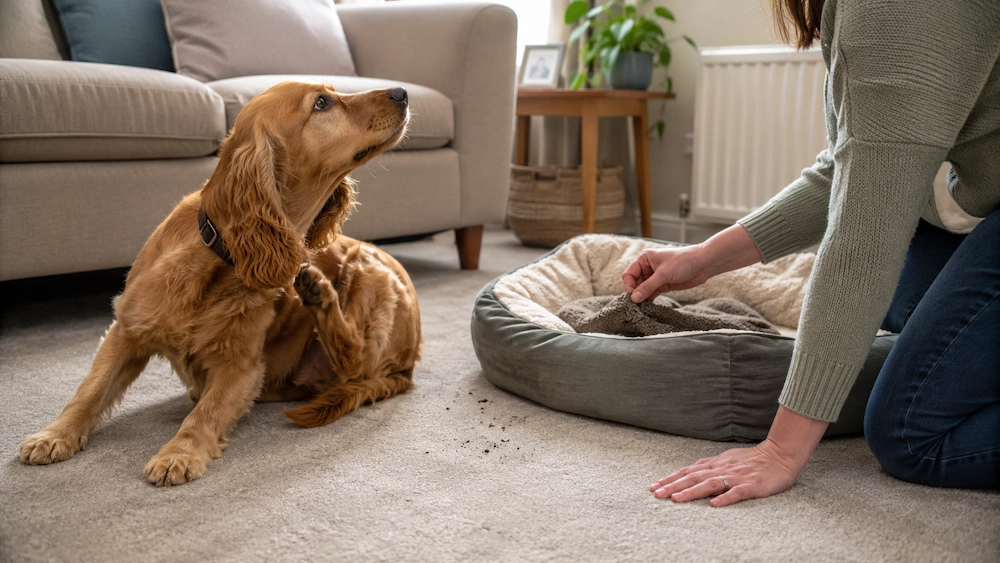
TL;DR: Fleas are small and hard to spot, but signs like itchy ankle bites, pet scratching, and dark specks in bedding can indicate an infestation. Acting early and identifying the source is key to preventing the problem from spreading throughout your home.
Key Takeaways
Fleas are small, fast, and easy to miss until the problem becomes hard to ignore. One day your pet is scratching more than usual, and the next you notice itchy red marks around your ankles. It can feel frustrating because the signs are not always obvious at first.
You may not see the fleas themselves, especially early on, but you might notice bites, irritation, restless pets, or tiny dark specks. This guide will help you figure out if fleas are in your home and what to look for. It also explains where they come from and when it might be time to get professional help.
Fleas are tiny reddish-brown parasites that feed on blood, usually only a few millimetres long. Their small size and speed allow them to move easily through fur, carpets, bedding, and upholstery without being noticed, often appearing only as a quick jump before disappearing.
Because of this, many people do not realise they have fleas until bites become frequent, or pets show clear discomfort, by which point fleas may already be in multiple areas of the home. Look for patterns rather than one-off signs, such as repeated ankle bites, constant pet scratching, or dark specks in bedding.
Flea activity usually shows up through a combination of symptoms. The more signs you notice, the more likely it is that fleas are present.
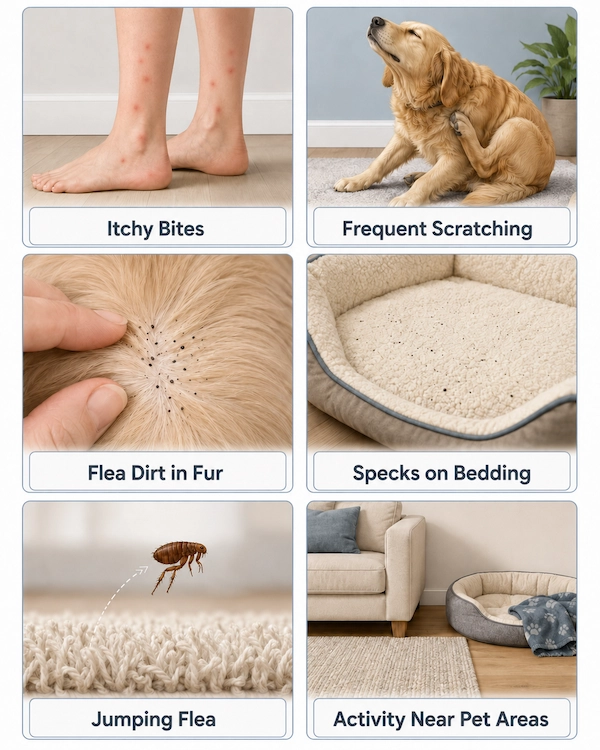
One of the most common signs of fleas is small, itchy bites on the feet, ankles, and lower legs. These often appear as red bumps, sometimes in clusters, especially if fleas are active in carpets, rugs, or soft furnishings.
Flea bites can be very itchy, and scratching may worsen irritation or increase the risk of infection. While bites alone do not confirm fleas, they are a strong clue when combined with pet scratching, dark specks, or visible insects.
If you have a cat or dog, your pet may show signs before you do. Watch for frequent scratching, biting, licking, restlessness, or discomfort when lying down. Some pets may develop sore patches, redness, hair loss, or irritated skin, especially if sensitive to flea saliva.
Do not assume it is a normal itch. Sudden or persistent scratching, especially around the back, tail base, belly, neck, or hind legs, could indicate fleas. Even indoor pets can pick them up from gardens, other animals, visitors, grooming visits, or existing activities in the home.
Another sign is “flea dirt,” which looks like small black or dark brown specks. You may find it in your pet coat, bedding, rugs, or where your pet sleeps, and it can resemble fine pepper or grit.
To check, comb your pet over white paper. If dark specks fall out, add a few drops of water. If they turn reddish brown, it likely indicates flea dirt, as it contains digested blood. This can help you spot fleas before you see the insects themselves.
Seeing a small insect jump from your pet, carpet, sofa, or sock is a more obvious sign. Fleas do not fly, but they can jump quickly, making them hard to catch and easy to mistake for a tiny moving speck.
Look in areas where pets sleep, near rugs, under furniture, along carpet edges, and around soft furnishings, and wear light-coloured socks while walking slowly to help spot movement around your feet and ankles. If you see repeated jumping insects in the same areas, the problem is unlikely to go away on its own.
Sometimes the sign is behavioural. A pet that suddenly avoids its bed, scratches after lying on the sofa, or seems restless at night may be reacting to flea activity.
Fleas often gather in places where a host rests, which means pet beds, blankets, cushions, and favourite sleeping corners are common hotspots. Do not only check your pet. Check the places your pet spends time in.
If bites appear after sitting in one chair, lying on a particular rug, or walking barefoot through a room, that area may be a flea hotspot. Fleas do not only live on animals.
Eggs, larvae, and pupae can hide in carpets, soft furnishings, floor gaps, and bedding, only for adult fleas to emerge when they sense warmth or movement. That’s why people sometimes start noticing bites after coming back from holiday, moving into a new place, or stepping into a room that’s been empty for a while.
Finding the source matters because flea control is not just about killing the adults you can see. You need to understand where infestation may have started and where it is spreading.
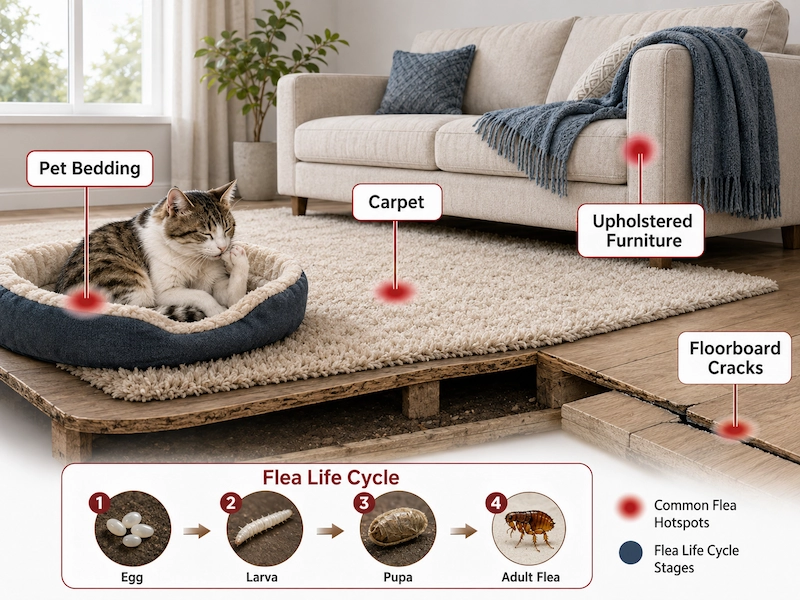
It’s worth remembering that this doesn’t mean your home is unclean, as fleas can become a problem in any home. They are opportunistic and can multiply quickly once they find a warm environment and a host.
Flea bites and bed bug bites are often confusing. Flea bites usually appear around the ankles, feet, and lower legs, especially after walking on carpets or near pet areas, while bed bug bites are often noticed after sleeping and appear on exposed skin such as the arms, shoulders, neck, or face. Fleas jump, but bed bugs do not.
Fleas are typically linked to pets, carpets, and soft furnishings, whereas bed bugs are associated with mattresses, bed frames, and sleeping areas. Bite reactions vary, so if you are unsure what is biting you, professional identification is the safest option, as treating the wrong pest can waste time and allow the problem to worsen.
You should consider professional flea control if bites continue, you can see flea activity, your pets are still scratching after treatment, or you suspect fleas in carpets, furniture, or multiple rooms. You should also get help if you do not have pets but are still being bitten, as this can point to a hidden source such as wildlife, rodents, previous occupants, or activity in less obvious areas of the property.
Professional pest control can assess the level of activity, identify likely hotspots, and apply suitable treatment to the areas where fleas are living and developing. The sooner you act, the easier the problem is to control. If you need expert help, you can learn more about professional treatment options on the flea pest control service page.
Pest Gone provides professional flea pest control across Bedfordshire, Milton Keynes, and nearby areas. As a family-run business with over 30 years of experience, we understand how stressful it can be when pests take over your home. Fleas are more than just a nuisance—they can disrupt sleep, irritate pets, and make everyday life uncomfortable.
We offer safe, effective, and discreet treatments, using unmarked vehicles and methods tailored to your home and the level of infestation. With strong local knowledge and a friendly, straightforward approach, we focus on solving the problem properly while keeping disruption to a minimum. If you need flea treatment in Bedford, we can assess the infestation and recommend the most suitable treatment for your home.
If you have itchy bites, restless pets, dark specks in bedding, or small jumping insects in your home, do not wait for the problem to get worse. Fleas can spread through carpets, furniture, bedding, and pet areas quickly.
What starts in one room can become a wider household problem if the source is not dealt with properly.
Contact Pest Gone today to arrange professional flea pest control.