Signs of Fleas in the House: 7 Clues Your Heating Could Be Waking Them Up
Spot the 7 signs of fleas in the house, from itchy bites to scratching pets. Learn how central heating affects flea activity and when to seek expert help.

TL;DR; Repeated wasp activity around the same area of your property is often the strongest indication that a nest is nearby, even if you cannot see it. Identifying the signs early and avoiding DIY removal can help reduce the risk of stings and prevent the problem from escalating.
Key Takeaways
Have you noticed wasps flying in and out of the same spot every day? While the occasional wasp in your garden during warmer months is normal, repeated activity around a specific area of your property could indicate a nearby nest. If wasps are regularly gathering around your roofline, loft, shed, garage, or wall cavity, it’s worth investigating further.
Because wasp nests are often hidden behind fascia boards, inside lofts, under decking, or within wall cavities, many people don’t realise there’s a problem until the activity becomes obvious. In this guide, we’ll cover the key signs of a wasp nest, how to assess the risk, and when to seek professional help.
Wasps can become more than a nuisance when a nest is active, as disturbed colonies may become defensive and increase the risk of stings for anyone nearby. This risk is higher when nests are located near frequently used areas such as doors, patios, pathways, or commercial premises, and it often grows as the colony expands throughout the season.
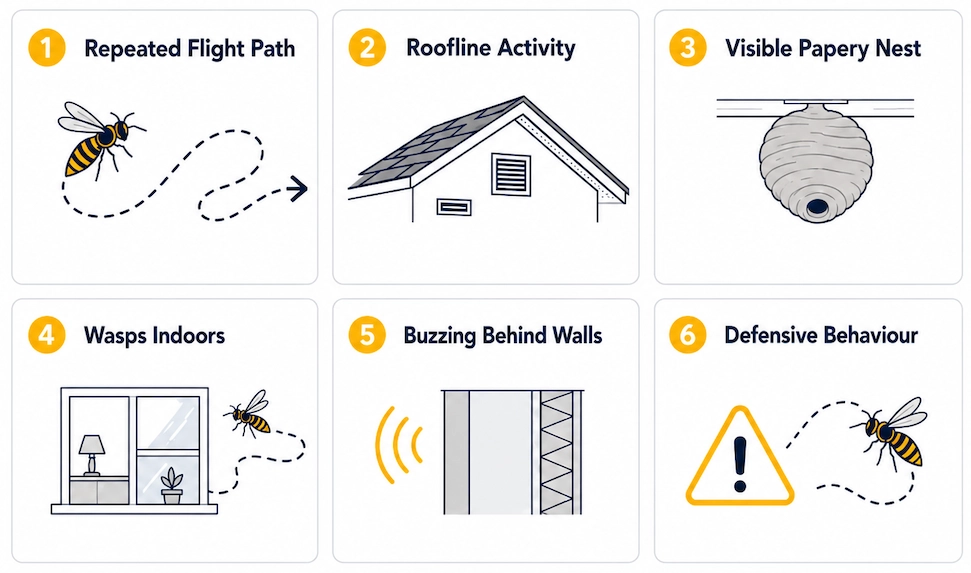
One of the easiest ways to spot a wasp nest is by watching where wasps go. If they keep flying in and out of the same gap in a roof, wall, shed, or vent, a nest is likely nearby. Observe from a safe distance and avoid blocking the entrance or disturbing them.
Many wasp nests stay hidden in roof spaces or wall cavities, with wasps slipping through small gaps around rooflines and vents. If you keep seeing them gathering in the same spot, there’s a good chance a nest is nearby. Avoid DIY treatment, especially at height, as disturbed wasps can become aggressive.
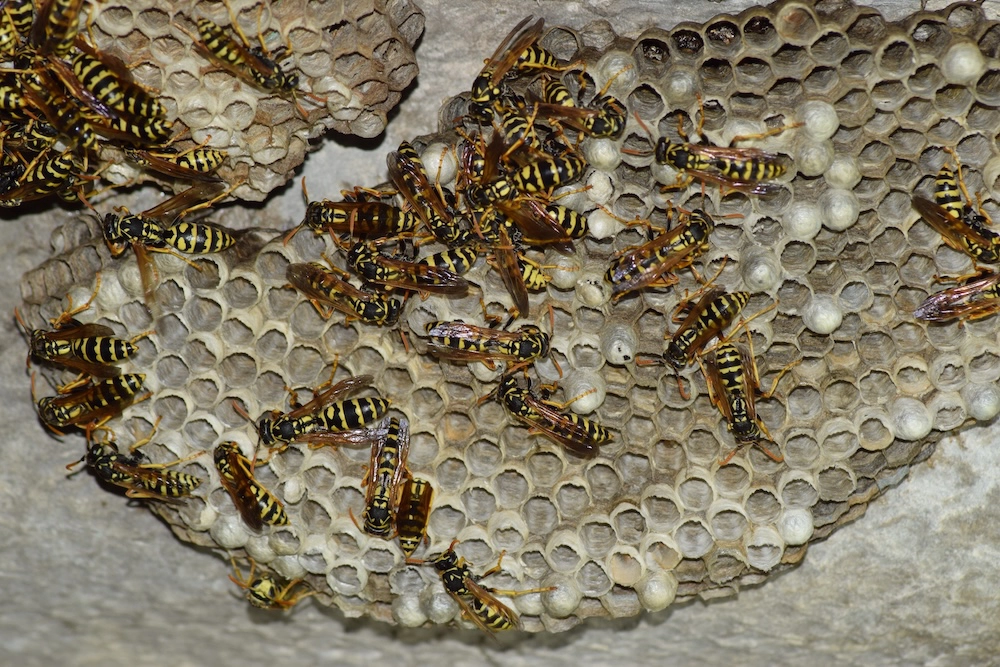
Sometimes a wasp nest is easy to spot. It typically looks grey or brown with a papery, layered texture. Common hiding places include sheds, garages, lofts, wall cavities, roof spaces, hedges, and under decking. Even if it seems inactive, avoid getting close—wasps may be using an entrance you cannot see.
Finding one wasp indoors now and then is fairly normal in summer. But if they keep appearing in the same room, especially near loft hatches, vents, chimneys, windows, or ceiling lights, there could be a nest nearby. Regularly finding dead wasps on windowsills may also point to hidden nesting activity.
A hidden wasp nest may produce a faint buzzing sound, especially when located inside a loft, wall cavity, or ceiling void. If you hear buzzing behind walls or ceilings, avoid tapping, drilling, or investigating the area yourself. Disturbing a concealed nest can provoke wasps and increase the risk of stings.
If wasps suddenly start circling you, flying near your face, or following you around a specific spot, they may be protecting a nearby nest. This often happens near sheds, rooflines, or garden structures. Stay calm, move away slowly, and keep children and pets clear of the area.
Not every wasp sighting requires immediate action. The level of risk depends on where the activity is taking place and how close it is to people.
Occasional wasps around flowers, bins, or outdoor food sources are usually part of normal seasonal activity. If there is no obvious flight path or nesting location, the risk is generally low.
Simple measures such as sealing bins, clearing fallen fruit, and covering food outdoors can help reduce attraction.
A medium-risk situation usually involves repeated activity around a specific area, but the nest is located away from regular foot traffic. Examples include nests hidden in sheds, outbuildings, or less-used parts of the garden.
Although the immediate danger may be limited, the nest can continue to grow and become more problematic over time.
A nest should be considered high risk when it is close to people, pets, customers, tenants, or staff. Nests near entrances, patios, play areas, loft hatches, workplaces, and outdoor seating areas can create a significant safety concern.
The risk is even greater if someone on the property has a known allergy to wasp stings. In these situations, professional treatment should be arranged as soon as possible.
Discovering a wasp nest often leads people to take immediate action, but some approaches can make the problem worse.
Avoid the following:
DIY treatments often fail because the visible entrance is not always where the nest is located. If the colony is not treated properly, the activity may continue and the wasps may become more defensive.
Professional wasp nest treatment starts with a careful inspection to understand exactly what’s happening. A technician will look for entry points, assess the level of activity, and identify where the nest is located before deciding on the safest and most effective way to deal with it.
If you’ve confirmed or strongly suspect that you have an active nest, it’s worth learning more about professional wasp pest control services. Experienced technicians can safely assess the situation, identify the nest location, and provide effective treatment tailored to your property.
When you’re dealing with a wasp nest, you need a pest control company you can trust. With more than 30 years of experience, family-run Pest Gone has helped homeowners, landlords, and businesses across Bedfordshire, Milton Keynes, South Cambridgeshire, and surrounding areas resolve pest problems safely and effectively.
Pest Gone combines professional expertise with a friendly, straightforward approach. They offer prompt support, use discreet unmarked vehicles, and prioritise safety in every treatment. Whether the issue is at a home, rental property, office, restaurant, warehouse, or retail unit, you can rely on Pest Gone for clear advice, effective treatment, and dependable support from start to finish.
An active wasp nest is unlikely to resolve itself while the colony remains active. The sooner the issue is assessed, the sooner you can reduce the risk of stings, disruption, and accidental disturbance.
If you’ve spotted any of the warning signs covered in this guide, don’t wait for the problem to grow.
Call today or request a quote online and take the first step towards a safer, pest-free property.