Signs of Fleas in the House: 7 Clues Your Heating Could Be Waking Them Up
Spot the 7 signs of fleas in the house, from itchy bites to scratching pets. Learn how central heating affects flea activity and when to seek expert help.

TL;DR: Late summer wasp activity increases as colonies reach peak size and worker wasps search more actively for sugary food. Understanding these seasonal changes can help reduce encounters and lower the risk of stings around homes and businesses.
Key Takeaways:
Wasps often become more noticeable around gardens, bins, entrances, and outdoor seating areas in late summer, raising concerns about stings. This change in behaviour is not random, as seasonal shifts within the colony and changing food needs make wasps more active around people.
It often seems that wasps become more aggressive in August and September, but they are usually just more focused on finding food and defending their nests. As food sources change, they become more noticeable around bins, gardens, patios, and outdoor dining areas.
This does not mean every wasp is looking to sting. Most are simply searching for food or protecting their nest, though encounters become more common in late summer.
A hungry wasp may not fly away when waved off and will often return to a food source. This persistence is often mistaken for aggression, but the wasp is usually just looking for food, while swatting or trapping it can make a sting more likely.
Earlier in the summer, worker wasps focus on feeding larvae and maintaining the nest. Their focus stays on maintaining the colony, with larvae providing a sweet food source that keeps workers from searching around people as often.
Late in the season, that system starts to break down as the colony matures and fewer larvae need feeding. Worker wasps then search for sugar outside the nest, making them more attracted to sweet foods and drinks around people.
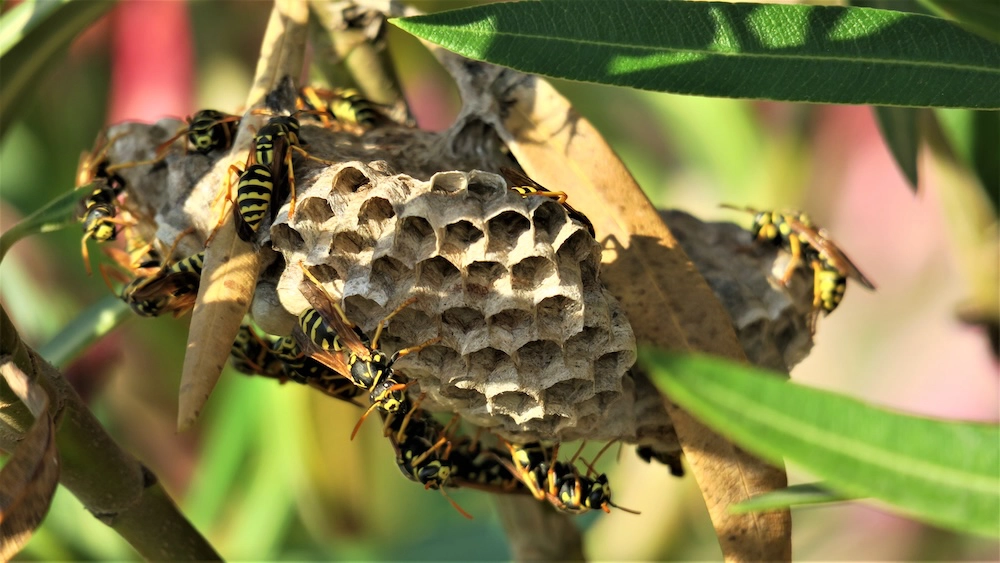
By late summer, a wasp nest can be much larger than it was earlier in the season, often hidden in places such as lofts or wall cavities. These established nests can contain far more wasps than most people realise, leading to increased activity around the property.
A larger colony means more worker wasps are available to defend the nest if they sense a threat. Disturbances such as garden work, maintenance, mowing, hedge trimming, or DIY removal attempts can trigger a fast defensive response from the colony.
Wasps defend their nest, and if one feels threatened, nearby wasps may react too, turning a small disturbance into a bigger issue. This is especially important around children, vulnerable people, and anyone with severe sting allergies.
Late summer wasp problems often build around food and waste because worker wasps are actively searching for sugary and easy-to-access sources. Open bins, fallen fruit, drink spills, and leftover food can quickly draw them into busy areas around homes and businesses.
Bins are a major hotspot due to strong smells and sugary residue, and once wasps find a reliable source, they tend to return repeatedly. They are also attracted to sweet foods and drinks, which is why they gather around gardens, patios, and outdoor seating areas.
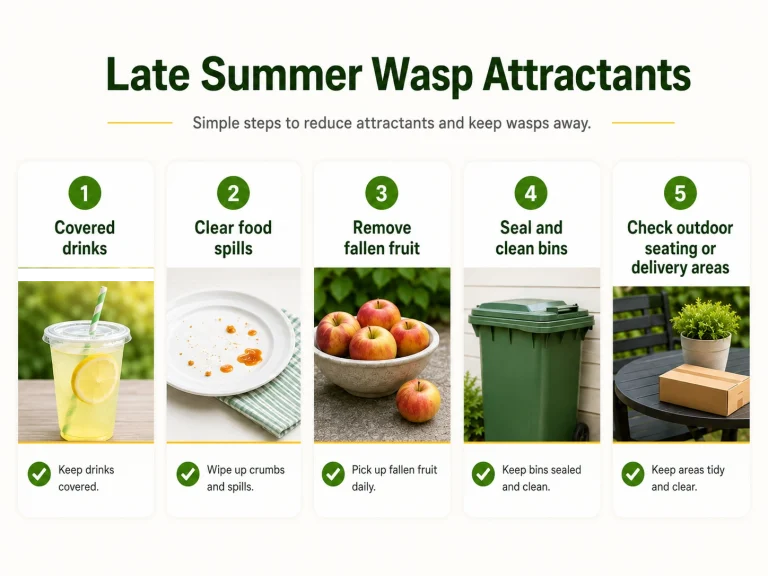
To reduce food-related wasp risks, follow these simple steps:
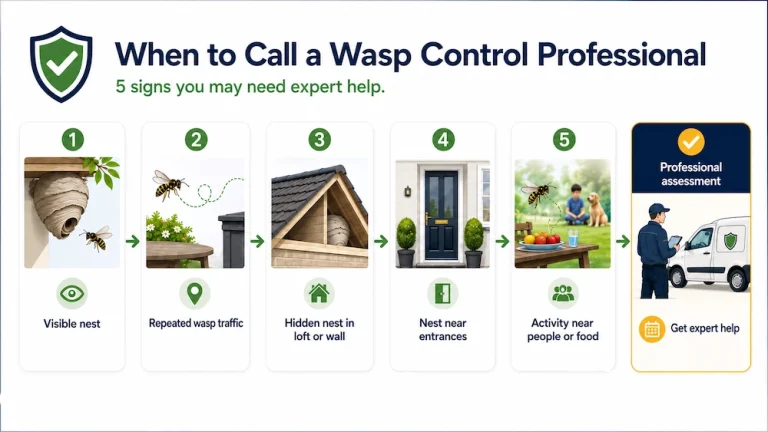
One or two wasps near food does not necessarily mean there is a nest nearby, but regular movement in and out of the same location is a stronger sign. Regular traffic around a specific area often indicates an active nest that may require closer attention.
Look for repeated movement around roof tiles, air bricks, fascia boards, sheds, loft vents, wall gaps, garages, compost areas, hedges, or holes in the ground. Indoors, regular wasps appearing in one room may point to an entry route nearby.
Wasp activity should be taken seriously when it affects busy areas or involves a hidden nest. Nests near children, pets, tenants, elderly residents, or food service areas pose a higher risk due to frequent activity nearby.
When dealing with late summer wasps, avoid actions that can increase the risk of stings or make the problem worse, including:
DIY sprays may seem like an easy fix, but late summer nests are often larger and more active than they appear. Using the wrong product or approach can increase the chance of stings and leave the colony active, allowing wasp activity to continue.
Homeowners can reduce wasp activity by removing common food sources and checking for signs of nesting around the property. Keep bins closed, clear fallen fruit, cover drinks, and watch for wasp activity near sheds, garages, lofts, and rooflines.
It also helps to keep children and pets away from any area where wasps are entering and leaving a fixed point. If the activity is steady, avoid mowing, trimming, hammering, or moving stored items close to that spot until the nest has been assessed.
For businesses, landlords, and letting agents, wasps can quickly become a safety and hygiene concern, especially near nests or food waste. Acting promptly helps reduce sting risks, prevent complaints, and stop a minor issue from becoming a larger problem.
Reporting a wasp problem early makes it safer and easier to manage, especially when a nest is near entrances, windows, or shared spaces. Photos can help but always stay a safe distance from an active nest.
Wasps help control insects and support pollination, but they can become a nuisance around people. Problems arise when their nests or feeding activity are close to homes, businesses, schools, or other busy areas where the risk of stings is much higher.
Professional help is safe when there is a visible nest, frequent wasp activity, or a nest near people, especially if it is hidden or hard to reach. Beyond removing the nuisance, professional treatment helps reduce the risk of stings and ensures the problem is handled safely and effectively. Wasp control in Bedford is a practical option for safely managing nests and reducing the risk of further wasp activity around your property.
Pest Gone provides professional wasp control and nest treatment across Bedfordshire, Milton Keynes, and surrounding areas. Their technicians are trained and experienced in handling active nests safely, using proven methods that minimise disruption to homes and businesses.
Customers can expect a fast response, clear communication, and a straightforward service from first contact to completion. Whether the issue is in a loft, wall cavity, shed, roofline, garden, or commercial premises, the team works efficiently to assess the situation and carry out treatment with care.
If wasps are becoming more active around your home, workplace, rental property, or customer area, now is the time to act.
Contact Pest Gone to book a fast response visit before the problem gets worse.